





At a Glance
-
Private banks have always adopted CX principles from hospitality to differentiate themselves in a competitive market.
-
As investment products become easier to compare, personalization, responsiveness, and relationship quality are becoming the main drivers of client loyalty.
-
The future of private banking lies in delivering continuous, high-touch experiences that extend well beyond traditional wealth management
Walk into a private bank today and you'll notice that the space looks nothing like traditional a bank. It's unintimidating, comfortable, and void of any visual reminders that you're in the presence of institutional money. Someone offers you coffee before you've sat down, and the conversation that follows feels refreshingly casual.
This is something the private banking industry has borrowed from hospitality. Part of the reason is staying competitive. Investment products are easy to access now. Digital platforms have done away with old barriers to entry, and wealthy clients now have more options than at any point in recent memory.
In many cases, the financial services on offer at different firms are indistinguishable. Healthy returns still matter, of course, but they are no longer sufficient to keep clients loyal or attract new ones. This is pushing many private banks toward an industry that has spent generations studying how to make affluent people feel looked after: luxury hotels, private airlines, and members' clubs.
These businesses understand something that financial institutions are only now beginning to internalize. High-net-worth clients are not paying purely for the service itself. They are paying for how the service makes them feel.
They remember the small things like quick responses, discreet handling of a problem, and the sense that someone had already thought ahead before they had to ask. Those impressions outlast any single transaction by years.
That said, what private banking is borrowing from hospitality runs much deeper than soft furnishings and champagne on arrival. That's what we unpack in this article.
Why Private Banking Needed to Change

Private banking has always positioned itself around relationships, but the expectations clients bring to those relationships have changed considerably.
Wealthy clients move through curated environments bolstered with seamless technology, anticipatory service, and creature comforts that a lot of us on the other side can't fathom. Exposure to experiences like that on the regular are bound to recalibrate their expectations across every part of their lives, banking included.
Banks are no longer just competing against each other. They are competing against the cumulative impression left by every premium experience a client has ever had. That's not an easy standard to meet.
Investment Performance Is No Longer Enough
For a long time, private banks could rely on the relative opacity of financial markets to maintain their position. Wealth management was a closed world. Information moved slowly, products were difficult to compare, and clients often stayed with the same institution across generations simply because switching felt complicated. Things have changed.
Affluent clients today can access sophisticated investment tools through fintech platforms, independent advisors, family offices, and boutique digital services. Most financial products are easier to compare than ever, and fee pressure across the industry has made differentiation on price nearly impossible.
When investment offerings start to look similar, the quality of everything surrounding those offerings becomes the deciding factor.
Clients now arrive with a broader set of expectations. They want faster communication, cleaner onboarding, digital access that doesn't feel like navigating a compliance manual, and advice that actually connects to their lives.
Many expect meaningful support across estate planning, philanthropy, tax structuring, business succession, and in some cases even the finer logistics of how they live. The private bank's role has shifted gradually from asset manager to long-term life advisor.
Wealthy Clients Now Compare Banks to Luxury Brands
A client who regularly stays at Aman properties, travels on private aviation, or works with a premium concierge service does not mentally separate those experiences from their relationship with their bank. The standard travels with them.
That creates a very particular kind of pressure. Slow responses, shoddy email signatures where your logo or headshot has the wrong aspect ratio, awkward digital portals, repetitive paperwork, or a relationship manager who clearly doesn't remember the last conversation all register as little failures that add up.
Luxury hospitality has understood this for a long time. The best hotels are remembered for the things guests never had to ask for twice: the room set up exactly as they like it, the problem that got resolved before it became an inconvenience, the staff member who remembered a dietary preference from eighteen months ago.
None of those moments are expensive. Instead, they're a matter of attention, competence, and inclination. It demands a certain level of integrity, to bring yourself to care enough to do something even when you know you can get away without doing it.
Private banks are working to produce the same effect. Some are investing heavily in client experience teams and redesigned physical spaces.
The Change From Transactions to Relationships

Private banking has always talked about relationships, but actually sustaining them has become more complicated.
Wealthy clients are more globally mobile, more protective of their time, and more likely to interact with multiple people within the same institution than to rely on a single trusted banker. That creates a real operational challenge.
A relationship that lives entirely inside one banker's memory is fragile. It doesn't survive a handover, a promotion, or a change in coverage. Institutions now need the systems to carry personal knowledge across teams and geographies so that service feels continuous rather than starting from scratch each time.
This is where hospitality becomes especially relevant. Luxury hotel groups have spent decades refining the infrastructure behind personal service.
Guest preferences, habits, past stays, and communication styles are recorded and shared internally so that a returning guest feels recognized at a property they've never visited before. The human warmth at the front desk is genuine, but it's also backed by a system built specifically to support it
Private Banks Are Taking Notes from Hospitality
The appeal of hospitality to private banking is not romantic. Banks are not trying to become hotel brands. The influence is practical: hospitality businesses have refined ways of creating experiences that feel personal, smooth, and emotionally intelligent at scale.
Those capabilities translate well into wealth management, and many private banks are adopting specific operational ideas from the industry.
Concierge-Style Service
One of the clearest changes is the rise of concierge-style relationship management. Traditionally, private bankers spent most of their time discussing financial products and investment strategies.
Today, clients at the upper end expect something considerably wider. Relationship managers help coordinate across estate planning, philanthropy, family governance, business matters, and personal logistics.
The job has expanded well beyond portfolio oversight. Luxury hospitality operates on the principle that the most valuable service often arrives before the guest realizes they need it.
Private banks are adopting the same standard. A strong relationship manager is expected to identify potential problems early, understand a client's preferences deeply enough to stay ahead of them, and make complex arrangements feel simple from the outside. The client experiences something effortless. Behind it is a significant amount of coordination.
Hyper-Personalization Through Data
Hotels track guest preferences meticulously. Preferred room configurations, dietary requirements, travel patterns, favored communication styles, even the kind of music a guest likes in the background. That information circulates internally so that each stay feels like a continuation. Private banks are doing the same kind of thing.
Behavioral data now shapes how many firms communicate with their clients. Some clients want a phone call. Others prefer encrypted messaging or a brief digital update. Some want detailed quarterly reporting.
Others care mainly about being able to reach someone immediately when something important happens. Technology allows banks to calibrate all of this at an individual level rather than defaulting to a standard format for everyone.
That personalization can extend further: reporting dashboards, digital interfaces, meeting structures, onboarding flows, even the way investment updates are framed can all adapt based on how a client actually behaves. When it works, clients feel recognized rather than processed. When it is handled clumsily, it can feel intrusive or staged. That distinction is not a small one.
Physical Spaces Designed Like Hospitality Environments
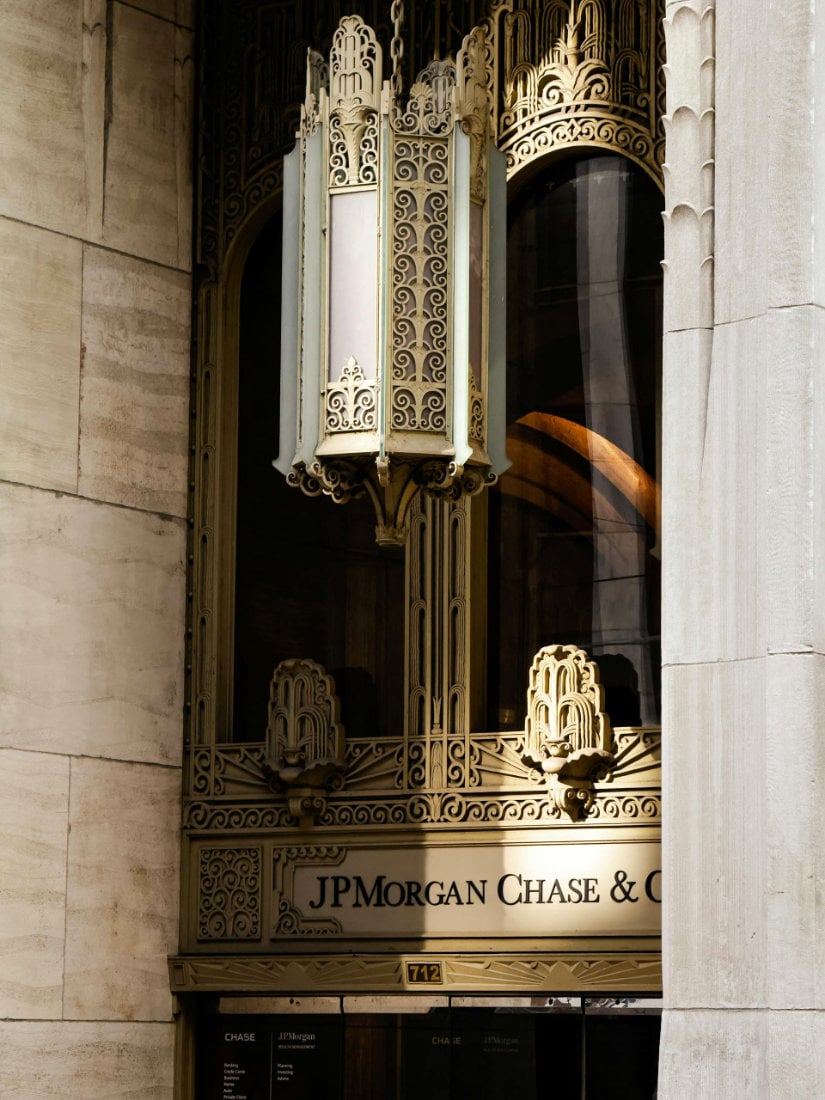
The design of private banking offices has changed considerably, and the direction is not subtle.
For decades, banking environments were designed to project authority, seriousness, and stability. The client sat across from an imposing desk in a room that reminded them, at every turn, that they were in a bank.
If you've ever said something along the lines of "this place looks like a bank", you know exactly what we're talking about. The Neoclassical and Beaux-Arts architecture has given way to contemporary design.
Consequently, modern private banks feel closer to a well-designed lounge or a boutique hotel lobby: think contemporary, minimal. or hybrid-chic. The atmosphere is comfortable. Not cozy, but not sterile either. Privacy still matters, but so does warmth, and the two are no longer treated as incompatible.
The reasoning behind this is well established in hospitality. Physical environment has a material effect on how people feel and behave in a space.
Clients who feel comfortable are more likely to speak openly, stay longer, and return. A space that feels welcoming rather than formal changes the quality of the conversation before a single word is spoken.
CX: A Competitive Advantage
As private banking grows more crowded, the quality of the experience itself has become one of the few areas where firms can meaningfully separate themselves.
Not through flashy perks or elaborate gestures, but through the kind of consistency that clients actually notice: responsive communication, frictionless processes, and interactions that feel human.
Speed, Availability, and Responsiveness
Wealthy clients have come to expect fast access to information and people. Waiting several days for a response, or being routed through layers of administrative process to reach the right person, no longer reads as normal. It reads as a problem.
That expectation is shaped by technology and by the broader culture around premium services. The best concierge, the best hotel, the best private aviation company all treat immediacy as a baseline. Banks are being held to the same standard.
Time is the one thing this client segment cannot buy more of, and they pay close attention to institutions that treat it accordingly.
Emotional Intelligence as a Business Skill
Hospitality trains its staff extensively in emotional awareness: how to read a room, how to adjust tone mid-conversation, how to handle a complaint without making the guest feel like a problem to be managed.
Those same instincts are increasingly valued in private banking, and for obvious reasons. Wealth management conversations are rarely purely financial. They involve inheritance tensions, business pressures, health concerns, relationships, and long-term questions about legacy.
Technical knowledge is necessary, but so is the ability to sit with a difficult conversation and respond to what is actually being said, not just the surface question. That quality is genuinely hard to systematize.
CRM Systems Are Becoming Experience Engines
Customer relationship management platforms were traditionally internal databases: contact information, account history, meeting notes. They are becoming something considerably more sophisticated.
Modern systems can track communication preferences, major life events, relationship histories, and patterns of behavior across many touchpoints over many years.
That infrastructure allows different people within the same institution to interact with a client in an informed, continuous way, rather than treating each interaction as if it were the first.
Clients should not feel like they are reintroducing themselves every time they speak with someone new. Good CRM systems make that possible.
The Balance Between Automation and Human Service
There is a ceiling on how much private banking can automate before it starts degrading the thing clients are actually paying for.
Ultra-high-net-worth clients often value direct human access precisely because it signals that they are not being handled by a system. That quality of attention is part of what makes the relationship feel exclusive.
Technology works best in private banking when it operates quietly in the background, making human interactions smoother and better informed, rather than replacing them with something more efficient but noticeably less personal.
The Risks of "Luxury Theater"
Not every attempt to blend hospitality principles with banking practice produces something worthwhile. Some firms have mistaken the surface elements of luxury for the substance beneath them.
Beautiful lounges, tasteful gifts, and polished branding can project an impression of exclusivity without resolving the underlying service issues that drive clients away. Clients who operate at this level tend to see through that fairly quickly.
Service Without Substance
No amount of refined atmosphere compensates for weak financial advice. Clients still expect strong expertise, sound risk management, and credible long-term performance.
The service experience matters, but it exists to support genuine competence rather than to obscure its absence. Hospitality principles work when they amplify what a firm already does well. They do not work as a substitute for it.
Personalization Can Feel Performative
There is also a meaningful difference between service that feels naturally attentive and service that feels engineered. Excessive gifting, strained familiarity, or experiences that have clearly been assembled by a committee tend to land awkwardly.
Wealthy clients, by and large, have a well-developed sense for authenticity, and they find its absence uncomfortable. Good service at this level tends to be quiet and specific, not showy.
Privacy and Data Concerns
Personalization depends on information, and that creates a real tension. Clients appreciate being recognized and remembered, but they also expect their personal details to be handled with the same discretion they apply to their finances.
As personalization systems become more sophisticated, the question of what gets tracked, stored, and acted upon becomes increasingly sensitive. In an industry where trust is the actual product, any breach of that expectation carries consequences well beyond the immediate incident.
FAQs
Private banking is evolving beyond investment management alone. As financial products become easier to compare and access, many firms are focusing on the client experience surrounding those products.
Hospitality-inspired service models, personalized relationships, and technology-enabled convenience are increasingly shaping how wealth management is delivered. The following questions explore some of the key themes influencing modern private banking and why customer experience has become such an important differentiator.
What is private banking?
Private banking is a personalized financial service designed for high-net-worth individuals and families. It typically combines investment management, wealth planning, lending solutions, estate planning support, and advisory services through a dedicated relationship team.
While financial expertise remains central, modern private banking increasingly focuses on delivering a tailored client experience. Many firms now position themselves as long-term advisors who help clients navigate both financial and personal complexities, rather than simply managing investment portfolios. This broader approach reflects changing client expectations and growing competition within the wealth management industry.
Why is customer experience important in private banking?
Customer experience has become a major differentiator because many financial products and investment services have become increasingly accessible and comparable. Clients often evaluate institutions not only on performance, but also on responsiveness, communication quality, convenience, and the strength of their relationships with advisors.
High-net-worth individuals are accustomed to premium service across many aspects of their lives and frequently bring those expectations into their banking relationships. As a result, firms that consistently deliver personalized, frictionless experiences are often better positioned to attract and retain clients over the long term.
What can private banks learn from the hospitality industry?
Hospitality businesses have spent decades refining how they build loyalty through personalized service, anticipation of customer needs, and seamless experiences. Private banks are increasingly adopting similar principles to strengthen client relationships.
This includes more personalized communication, proactive support, concierge-style service models, and better coordination across teams. The goal is not to imitate hotels or luxury travel providers directly, but to apply the same service philosophy. By making interactions feel more thoughtful and consistent, banks can improve trust and create stronger emotional connections with clients.
How does personalization improve client relationships?
Personalization helps clients feel understood rather than processed through standardized systems. Effective personalization can involve communication preferences, reporting formats, meeting styles, life-stage considerations, and broader relationship management practices.
When clients feel recognized as individuals, interactions often become more efficient and meaningful. However, successful personalization requires balance. It should feel helpful and relevant rather than intrusive. Organizations that use data thoughtfully while maintaining discretion are often better positioned to build trust and create relationships that endure across changing circumstances and multiple generations.
How is technology changing wealth management?
Technology is making personalized service more scalable by helping firms manage information, streamline processes, and respond more quickly to client needs. Tools such as advanced CRM systems, digital onboarding platforms, secure communication channels, and artificial intelligence can improve both efficiency and consistency.
However, most clients do not want technology to replace human relationships entirely. The most effective firms use technology to support advisors rather than substitute for them. By reducing administrative friction and improving access to information, technology can help relationship managers focus more attention on meaningful client interactions.
Banking as an Ongoing Experience

The broader direction is fairly clear. Private banking is becoming less transactional and more continuous. Clients increasingly expect relationships that feel responsive, personally calibrated, and integrated into the rest of their lives in a meaningful way. Hospitality principles offer a working model for how to create that sense of continuity at scale.
The firms that stand out will be the ones that combine genuine financial capability with the attentiveness and emotional intelligence that have always separated good hospitality from merely adequate hospitality.
In an industry where the financial products themselves are growing harder to differentiate, the quality of the experience surrounding them is becoming the thing that actually keeps clients.