




Sensory marketing has been used by some of the world’s biggest brands for decades. Famous examples range from the iconic sound of a Coca-Cola can being opened and the drink poured over a glass of ice cubes, to the unmistakable fragrance, “Fierce No. 8,” spread throughout all Abercrombie & Fitch stores, on the clothes and beyond the front doors.
Traveling and staying in a hotel - whether for business or pleasure - is a big experience and definitely taps into our emotions. Marketing to a traveler's taste, smell, touch, sight, and hearing, therefore highly contributes to creating powerful memories and presents a real opportunity for hospitality experts to wow their customers and boost loyalty.
What is Sensory Marketing?
Sensory marketing is a type of marketing that appeals to the five senses of prospects, leads, and customers in order to evoke emotions or memories and create a memorable experience. Done well, it establishes an emotional bond between brand and customer and, as such, increases brand loyalty.
Companies also use sensory marketing to increase brand recognition through reflex association.
The chances of you completing someone's "bada-ba-da-baaaa" with "I'm lovin' it" and then thinking of McDonald's are high, and an example of how a company created an association between a sound (a jingle) and its brand.
Sensory Marketing vs Sensory Branding
Sensory marketing refers to the implementation of techniques and strategies to entice and engage customers by offering them a certain sensory experience.
Sensory branding happens when sensory marketing is used to build a brand's identity around certain sensory stimuli.
McDonald's jingle is sound marketing. McDonald's Golden M (sight), combined with that jingle (hearing), the scent that's the same at all their locations (smell), and their menu items that pretty much always taste the same (taste) make up a consistent sensory brand identity.
Sensory Marketing Examples

Before we have a look at how hotels can include the senses in their marketing strategy, let's quickly go over the senses brands can influence.
Smell
Scents have an incredibly evocative power, but they're also tricky as they can be hard to control in large spaces where many people pass.
Yet imagine the smell of fresh bread as you step into a bakery, the scent of lemon after your hotel room was cleaned, or the omnipresent perfume that follows you out of Abercrombie & Fitch stores.
They make your mouth water, strengthen the idea of "clean", and build familiarity.
Hearing
Auditive marketing includes jingles, the type of music you play at your property, and even the acoustics in your common areas if consciously designed to create a certain effect.
Some brands go even further and create their own podcasts or have a member of the leadership team appear on industry podcasts.
We can choose not to touch something or taste something, and we can even close our eyes (even though it's not so practical). But it's very hard to not hear something.
That means you need to get the auditory experience just right. But when you manage, sound is a powerful tool to incentivize purchases. A study in the Proceedings of the National Academy of Science found that when someone listens to music they deem pleasing, their body releases dopamine and they're more likely to buy.
Sight
Marketing to sight is marketing through visual elements. It's also the most commonly known type of marketing as it includes things like logo and brand colors.
Visual marketing also entails:
- color schemes
- interior and exterior design
- staff's attire
- posters
- advertising graphics
- flyers
- the graphic part of social media posts
Touch
Have you ever rubbed a piece of clothing between your fingers to get a feel for its quality? Admired the slickness of a MacBook or squeezed a fruit to see if it was ripe? Then you know how much touch can play a role in purchase decisions and quality perception.
Marketing through touch doesn't always need to happen in person. By using an audio or textual description, striking visuals, or even sound, you can give people an idea of the texture of something.
Taste
We all have an equivalent of "Cafe X has the best coffee" or "Restaurant Y serves pies that are pure comfort." Just like a hotel can have a signature scent, look, music profile, or tactile quality, it can have a signature dish or drink.
We'll see a good example of that a bit further down this article.
Sensory Marketing Strategies for Hotels
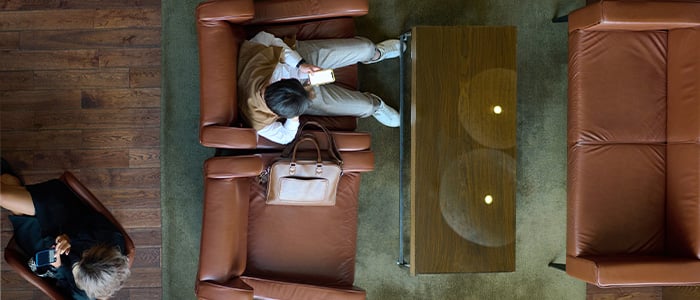
In this section, we'll list some sensory marketing strategies that work for hotels, as well as some examples of brands that use sensory cues in their marketing.
Visual Marketing
Anyone who is looking to book a hotel today is going to want to see what the property looks like before they complete their reservation. Making high-quality photos available on your website, social media accounts, and other marketing materials is, therefore, a necessity, but it is not enough.
You also want to appeal to the visual sense through descriptive copy, clean fonts, a vibrant color palette, and an overall appealing design.
On-site, create a cohesive experience across your hotel's furniture, the staff's attire, the art on the walls, … basically anything and everything your guests may see. Any inconsistency can weaken the brand image you're so carefully trying to build.
Scent Marketing
When you think about it, smell is one of the most powerful, emotional senses that you have. Properties worldwide already use signature scents to create a tailored and consistent customer experience and entice brand recognition.
Intercontinental Hotels Group (IHG) for example, has determined a specific scent for each of its brands that caters to different target markets, taking into account its guests’ expectations and desires.
And at the MontCalm in London, guests can even choose a scent for their room from a scent menu, allowing them to personalize their experience.You can use scents to make hotel rooms smell cleaner (lemon), spas more relaxing (lavender), or to emphasize the location of your hotel (pine and wood scents when you're based in nature).
Upscale hotels might create their own line of toiletries that guests can purchase to take home. Not only does this provide a signature experience, it ensures that people will think of you until long after their stay.
Sound Marketing
From in-room connections to streaming services like Spotify to ambient sounds at the spa and the background music playing at the bar, there are many ways music can help hotels generate emotional connections with their guests.
Look at a hotel brand that made music the core of its brand identity: Hard Rock Hotels. As part of their experience, Hard Rock Hotels guests can define “the sound of their stay” and enjoy a perfectly curated selection of tunes.
Note that sound marketing isn't limited to what you play or don't play, but also how you play it. Changes in tempo and volume can impact a guest just as much as the sound itself.
Tactile Marketing
The textures, fabrics, and materials that make up a hotel property are a unique opportunity to convey a feeling of luxury or comfort to guests. Pleasant tactile experiences make the body release oxytocin, also known as the "love hormone" because it makes us feel all warm and well. Not a bad state to have associated with a stay at your hotel.
Some more creative examples of tactile marketing include:
- Letting travel show visitors experience what it's like to lie in one of your comfortable beds.
- Marketing videos that show people's delight as they wrap themselves in your hotel bathrobes.
- Using areas that aren't restricted to guests (the restaurant, conference rooms, …) as a way to showcase the type of tactile comfort and pleasure people can expect when staying with you.
And if you advertise in other outlets, make sure they reflect the tactile experience you provide. Luxury hotels are better to advertise in luxurious, high-quality magazines than in thin-papered newspapers.
Taste Marketing
For more than 25 years, DoubleTree by Hilton hotels have been welcoming guests with a warm, chocolate chip cookie at check-in. Today, the famous cookie has its own website.
Welcome drinks, branded chocolates on guest pillows, … There are multiple ways in which you can use food and beverages to add a little something to the experience, even if you don't have an on-site restaurant and bar.
When you do, designing a unique sensory restaurant experience not only improves the customer experience but also helps you generate more sales from non-hotel guest visitors.
And yes, also taste marketing can be done from a distance. Let's give it a try right now:
As you read this, think of your favorite food in the world. Imagine what it tastes like in your mouth, the texture as you bite into it, …
Notice some saliva production right there? Perhaps some feelings of joy as well? And that was just from reading two sentences. Imagine what a well-designed marketing campaign could do.
Create a Cohesive Multi-Sensory Experience
While a sensory marketing campaign might target just one of the senses, it's close to impossible to shut (potential) guests off from their other senses. Someone who steps into your hotel lobby will instantly be exposed to the design of that lobby, the music that's playing there (or not), the acoustics, and the smell.
It's therefore important not to create sensory campaigns in isolation but always as part of and matching with your overall brand, while also keeping your target audience front and center.
Cautionary note:
You may have the most cohesive vision for your sensory branding, but if guests consistently feel like something's off, you need to make some changes.
If you play loud music at your bar because your whole concept revolves around being hip and trendy, but people leave because it's impossible to have a conversation, you have a problem.
Get it right, however, and providing an experience that targets multiple senses can memory recall of your brand by up to 70% in comparison to when you keep the experience focused on just one sense (Journal of Consumer Research, 2021).
Creating Memorable Experiences Through the Senses
Sensory marketing works to invoke positive emotions, memories, and associations to the point of influencing consumer behavior. When implemented consistently, it can help establish a brand identity that is easy to recognize and nurtures brand loyalty in the right audience.
Hotels can infuse different sensory elements in both their offline and digital marketing at all stages of the buyer's journey. However, it's important that sensory marketing campaigns match the hotel's overall brand image and that marketers adapt when guests respond badly.