




Smart hotel rooms revolutionize hospitality by combining comfort, personalization, and sustainability in ways that were previously unimaginable.
These rooms integrate advanced in-room technology, predictive data, and interconnected systems to anticipate guest needs, offering personalized experiences that feel effortless and tailored. From adjusting lighting and temperature to recommending services or entertainment based on guest preferences, smart rooms create bespoke hospitality stays.
For hoteliers, investing in smart hotel rooms is becoming increasingly essential, supporting sustainability initiatives and meeting evolving guest expectations. As guests encounter automated hotel rooms on different stays, they are coming to expect smart room technology as a given.
What smart hotel technology tools are hospitality brands already using, and how might they be used to enhance the guest experience?
Let’s dive in.
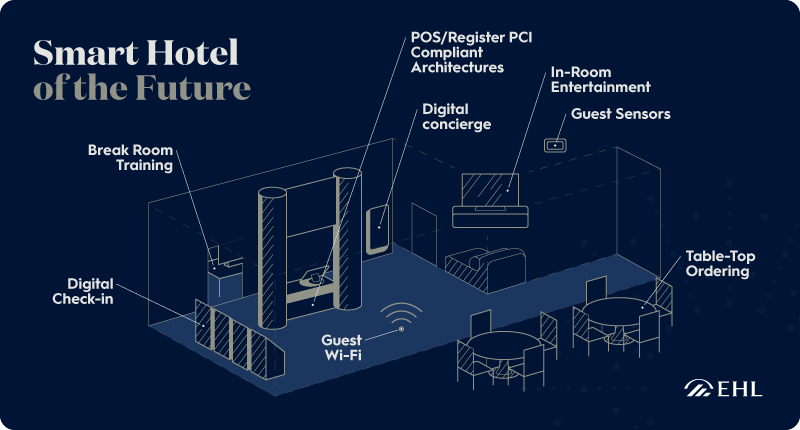
Real-time Date and Automation
High-tech hotels are already gaining a competitive advantage over their nearest competitors. By using real-time data and automation, hotels can reduce their energy consumption, optimize housekeeping schedules, and offer personalized services that increase guest satisfaction.
Guests benefit from a stay made more comfortable and convenient, with smart room technology enhancing rather than replacing highly valued human interaction.
Automated hotel rooms provide a platform for combining intuitive design, predictive insights, and high-touch service, allowing hospitality brands to differentiate themselves while maintaining consistent quality and comfort.
The key to the future success of smart hotel rooms lies in the ability of the technology to add value to the guest experience while offering operational benefits to businesses.
Getting it right requires not only the development of the right tools, but also their intelligent deployment. Offering automation where it’s not needed nor valued can be seen as gimmicky and a distraction from essential customer service.
Tailored Comfort Through In-Room Intelligence
Smart hotel rooms are designed to provide a level of tailored comfort that goes beyond what guests might expect in standard accommodation.
By integrating in-room sensors, automation, and intuitive control systems, automated hotel rooms can adjust lighting, temperature, and humidity automatically to match each guest’s preferences.
Occupancy sensors detect whether a room is empty, allowing lights and climate systems to dim or switch off, which enhances comfort and also ensures energy efficiency and sustainability.
This level of personalization has the potential to transform a hotel stay into a memorable guest experience. Combining automation with real-time data enables hotel operators to anticipate guest needs and create an environment that feels genuinely responsive.
When used effectively, in-room intelligence can reinforce a sense of hospitality that combines the high-tech with the human.
Smart room technology also offers a range of operational benefits. Housekeeping schedules, maintenance alerts, and energy management can all be optimized based on sensor data, allowing staff to focus on delivering personalized service.
Tailored comfort through in-room intelligence can enhance the guest experience, combining efficiency, personalization, and sustainability.
Unified Control for a Frictionless Stay
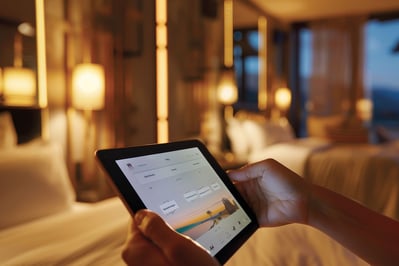
In smart hotel rooms, unified control systems are designed to make the guest experience as effortless as possible. Rather than managing multiple remotes, switches, or panels, guests interact with a single digital interface that brings all room functions together.
This approach reflects the evolution of smart room technology, where innovation is being used to aid convenience and simplicity.
Through app-controlled hotel rooms or in-room tablets, guests can easily personalize their environment without technical complexity. These smart room controls reduce friction and allow guests to create the exact mood and flow they want, whether they are arriving after a long journey or settling in for the night.
In many high tech hotels, these systems are supported by IoT hotel technology, enabling communication between devices and systems.
Unified control typically allows guests to manage:
- Lighting scenes and brightness levels using in-room technology
- Curtains and blinds, including automated opening and closing
- Climate settings in automated hotel rooms
- Entertainment systems such as TV, music, and streaming platforms
- Digital services such as housekeeping requests or a digital key hotel interface
Some properties also integrate voice controlled room features, allowing guests to adjust settings hands-free. Increasingly, AI in hotel rooms supports these systems by learning guest preferences and adapting settings automatically over time.
By providing guests with a single centralized interface, smart hotel rooms minimize confusion and enhance comfort.
Sustainability Powered by Smart Design
Smart hotel rooms play an increasingly important role in helping hospitality businesses reduce their environmental impact without compromising guest comfort. By integrating in-room technology with intelligent automation, hotels can significantly cut unnecessary energy use while maintaining comfortable living conditions for guests throughout their stay.
Smart hotels are already using technology to minimize their environmental impact. According to EHL research, up to 60% of a hotel’s CO₂ emissions come from heating, ventilation, lighting, and cooling systems.
In automated hotel rooms, smart room systems work quietly in the background, responding in real time to guest presence and behavior. IoT hotel technology enables lighting, HVAC, and window systems to communicate with one another, creating an energy-efficient ecosystem that can continuously adapt.
Guests still enjoy a comfortable environment, while hotels benefit from lower energy costs and reduced emissions.
Sustainability-focused features can include:
- Occupancy-based lighting and climate control
- Smart temperature regulation linked to guest preferences
- Automated energy reduction during low-usage periods
- Central monitoring of energy consumption across rooms
High-tech hotels also allow guests to engage in sustainability efforts with app-controlled hotel rooms that allow them to consciously adjust settings. In some cases, utilizing AI in hotel rooms optimizes efficiency by learning usage patterns and fine-tuning energy consumption over time.
Embedding sustainability into smart design, smart hotel rooms demonstrate how technology can support responsible hospitality. The result is a reduced carbon footprint and lower operational costs that can also deliver an enhanced guest experience.
AI Concierge At Your Command
In smart hotel rooms, AI-powered assistants are changing the ways in which guests access information and services during their stay. Acting as virtual concierges, AI in hotel rooms can respond instantly to voice commands, allowing guests to make requests without picking up a phone or using apps and menus.
From simple questions about the hotel’s facilities to arranging transportation or booking a restaurant, AI technology can give guests a greater sense of control over their stay.
AI assistants are becoming a key component of advanced smart room technology. They draw on guest profiles, past behavior, and real-time data to deliver recommendations that have a greater degree of relevance and personalization.
For example, a returning guest may receive restaurant suggestions based on their previous preferences. First-time visitors might be guided toward local experiences that match their guest profile and demographic. While not being entirely foolproof, this level of responsiveness can enhance the guest experience through added convenience.
In many high tech hotels, AI concierges are integrated with in-room technology and wider hotel systems. This enables guests to control lighting, climate, and entertainment as part of a full voice controlled room.
Guests can adjust settings, request housekeeping, or check-out using just spoken commands, saving time and reducing friction.
AI can be connected with smart room controls and app-controlled hotel rooms, giving guests the flexibility to interact in a way that suits them.
Enhancing The Guest Experience Through Data-Driven Personalization
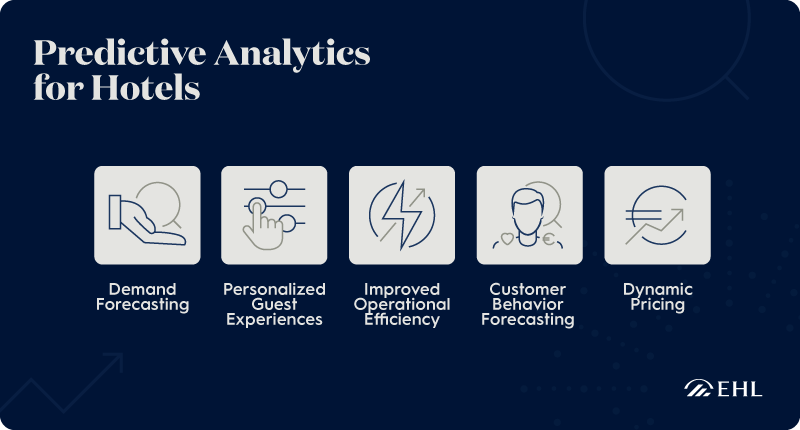
According to EHL’s Hospitality Outlook 2025 report, AI and predictive analytics are increasing adoption because they help deliver tailored service and operational efficiency.
In automated hotel rooms, predictive systems can anticipate maintenance needs, optimize energy usage, and align housekeeping schedules with actual room occupancy, reducing waste while improving service reliability.
In smart hotel rooms, data plays a key role in shaping more intuitive guest experiences. Smart room systems continuously collect information on guest behavior, such as preferred lighting levels, curtain usage, ideal room temperature, and even the times guests are most active in their rooms.
The data is captured unobtrusively through in-room technology that allows hotels to understand patterns of guest behavior without disruption.
By analyzing this information, hotels can be more proactive in service provision. For example, lighting and climate can be automatically adjusted in a room to match a guest’s known preference upon arrival, or to prepare the room environment at the times a guest typically returns in the evening.
Over multiple stays, this level of personalization can become increasingly refined. Used in this way, smart room technology can become a tool for long-term relationship building rather than just improving convenience on a one-off visit.
Predictive Personalization
A data-driven approach can also enhance consistency across properties, particularly for hotel brands operating multiple locations. Guest preferences are securely stored and can be applied across stays in different locations.
Smart hotel rooms deliver familiarity and comfort regardless of destination. This consistency can build trust and reinforce brand loyalty. Guests know they’ll receive a familiar, consistent service at all of a brand’s hotels.
Predictive personalization means that smart room technology can become a key driver of higher guest satisfaction. Using data intelligently and responsibly allows hotels to create stays that feel personal and thoughtfully designed.
In-room technology can reduce the stress of visiting somewhere new for the first time, providing a degree of familiarity and comfort that analog hotels may struggle to replicate.
Smart Hotel Rooms Behind the Scenes: Efficiency and Innovation
Smart rooms are much more than just in-room features for guests. By automating routine tasks, hotels can boost their operational efficiency. Staff can monitor room status, maintenance needs, and energy usage in real time.
According to EHL’s innovation strategy research, around 72% of executives report implementing technological innovations in their hotels, making these operations a core component of future-ready business models.
Beyond monitoring and maintenance, smart room technology enables hotels to optimize staffing and resource allocation. Housekeeping can be scheduled based on actual occupancy patterns, and predictive alerts can flag potential equipment issues before they disrupt a guest’s stay.
Energy management systems reduce waste by adjusting HVAC and lighting automatically, lowering costs while supporting overall sustainability goals.
These operational efficiencies free staff to focus on personalized service, ensuring that high-touch service is available, even in a high-tech hotel environment.
Combining automation with real-time insight, smart hotels can create a balance between efficiency, sustainability, and guest satisfaction.
Data Privacy in a Connected World
Implementing advanced in-room technology requires careful management of guest data. Hotels need to be transparent about how information is collected, stored, and used, ensuring full compliance with regulations such as GDPR and other regional privacy standards.
Clear communication about data usage builds trust and also reassures guests that their personal information is secure, which is especially important in smart hotel rooms where multiple devices continuously gather insights.
Data breaches can be costly, not only in terms of reputation, but also in fines and other penalties that may arise as a result. By adopting best practices in data management, hotels can avoid the negative consequences of data breaches, while building trust among customers.
Protecting guest data is an essential part of successful implementation of smart technologies in the hospitality industry. This builds on data protection protocols already in place in hotels to protect customer data when using hotel WiFi, booking, or making digital payments.
Smart Hotel Rooms Are The Future of Hospitality
Smart hotel rooms represent a significant shift in how hotels deliver a personalized service to guests. By combining intelligent in-room features, sustainable design, AI-powered technology, and data-driven service, hotels can craft stays that feel effortless, intuitive, and uniquely tailored to each guest.
Behind the scenes, automation supports staff, reduces operational costs, and can foster long-term loyalty.
Hotels that embrace these smart technologies today in an intelligent way are positioning themselves as tomorrow’s industry leaders, offering experiences that are modern, memorable, and future-ready.