





At a Glance:
- Service industry verticals such as hospitality, banking, travel, retail, and real estate face growing pressure to operate more sustainably.
- Most services sectors carry significant carbon footprints through their supply chains, financed assets, and customer behavior.
- Measuring and reducing environmental impact in services is structurally harder than in manufacturing, because outputs are intangible, supply chains are opaque, and delivery depends on human decisions at scale.
- Some organizations outsource their sustainability function to specialist providers; others embed sustainability into the service itself, making it the core value rather than a compliance layer.
- Leading organizations treat sustainability as a source of competitive differentiation and revenue.
- A wave of corporations rolled back on sustainability commitments in 2025. Companies that made public pledges and are now retreating face greater scrutiny than those that never committed in the first place.
For decades, the sustainability conversation centered on industries you could see: steel mills, shipping containers, oil refineries. Services got a pass. They produce no physical goods, run no assembly lines, leave no visible residue. The assumption was that intangibility meant cleanliness.
That assumption is now being stress-tested across every major service sector simultaneously. Hotels, banks, travel companies, retailers, and real estate developers are all facing versions of the same question: how do you make something genuinely sustainable when the product is largely invisible, the supply chain is diffuse, and the workforce is the delivery mechanism?
There are no clean answers yet. But the pressure to find them has moved well beyond voluntary commitments and annual reports. In this article, we examine why sustainability in the service industry has become unavoidable, what makes it structurally harder than in other sectors, and where the gap between leading and lagging organizations is opening up.
The Service Sector’s Carbon Problem
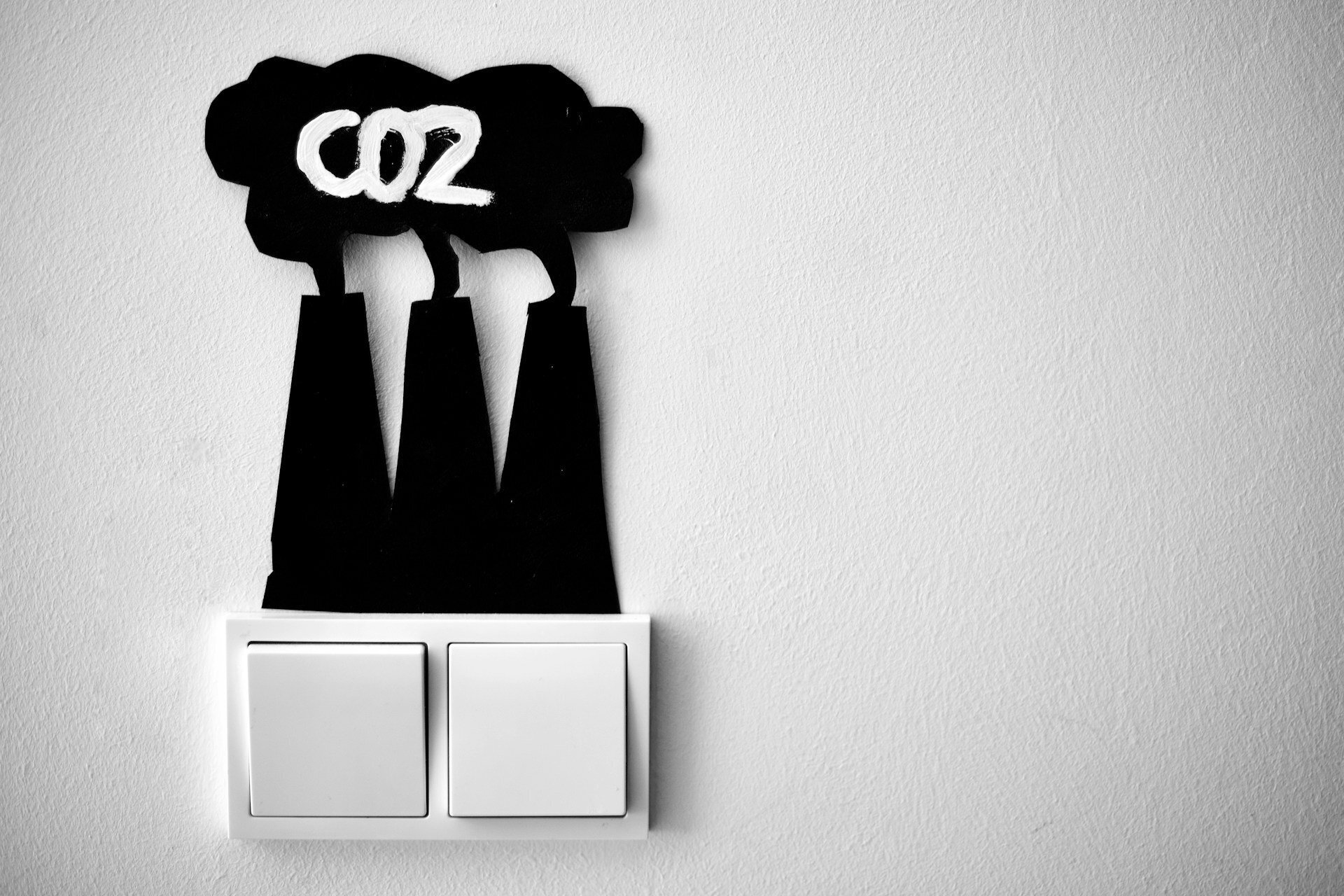
The idea that services are inherently low-impact made more sense when sustainability was measured primarily by smokestacks and factory floors. Carbon accounting tells a different story. Consider where the emissions actually sit. For a global hotel group, the largest source is often not its buildings or operations but the air travel guests take to reach the property.
A retail bank's environmental exposure is embedded in its loan portfolio, in the financed emissions of the companies and projects it funds. For a commercial real estate developer, much of the carbon footprint is locked into embodied carbon before a single tenant moves in.
These are Scope 3 emissions, and until recently most companies either did not measure them or were not required to. That is changing fast. Companies with significant EU exposure are now required to report value-chain emissions including Scope 3, with non-compliance carrying financial penalties.
The EU's Green Claims Directive and Digital Product Passport take effect in 2026. According to Euromonitor's 2024 industry survey, 71% of companies globally are already reporting some degree of government pressure to adopt climate initiatives. The service sector is not watching this from the sidelines.
Regulatory, Investor, and Consumer Pressure
Service organizations have faced sustainability pressure before and managed it through disclosure, pledges, and incremental operational improvements. What has shifted is that three separate forces are now arriving simultaneously rather than sequentially, which is why the urgency feels categorically different from five years ago.
On the regulatory side, the picture is uneven but directionally clear. The EU is most advanced, but its reach extends to any company with significant European operations or supply chain exposure.
Voluntary adoption of the Corporate Sustainability Reporting Directive has already reached 68% of companies in relevant markets, and 61% are aligning with ISSB standards.
On the investor side, ESG criteria are embedded in capital allocation across asset classes. For real estate, this creates stranded asset risk on buildings that cannot meet energy performance thresholds.
For hospitality groups seeking development finance, sustainability credentials are increasingly part of the lending conversation. Green bonds and sustainability-linked loans have moved from niche instruments to standard ones.
Consumer behavior adds a third layer, though the signal is uneven. Global per capita spending on sustainable products rose 23% between 2020 and 2023, expanding across 24 of 25 markets tracked. Luxury travel and premium retail show stronger purchasing patterns than mass-market equivalents, which matters for how service companies sequence their investments.
What Makes Sustainability Harder in Services
Manufacturing has its own challenges, but at least the inputs, outputs, and waste streams are measurable. Services present different problems.
Intangible outputs resist standard carbon accounting. Life cycle analysis, the tool most commonly applied to physical products to map environmental impact from raw material to disposal, was not designed with a hotel stay or a financial transaction in mind.
Proxy metrics exist but are still being standardized, and the gap between what companies report and what is actually comparable across organizations remains wide. Workforce dependency adds another layer of difficulty. A sustainable service is not delivered by a sustainable building or a procurement policy alone.
It depends on decisions made by people at every level: the housekeeper deciding whether to replace towels, the financial advisor weighing ESG factors in a client portfolio, the travel consultant presenting lower-carbon itinerary options.
Shifting those decisions at scale requires something more durable than a policy document. Then there is supply chain opacity. Researchers Wolfson, Tavor and Mark, writing on sustainable service design, argued that no service exists in isolation from manufacturing and agricultural processes.
A hotel's sustainability profile extends to its food suppliers, linen contractors, energy providers, and technology vendors. Similarly, travel operators cover every airline, accommodation partner, and ground transport company in their network. Visibility into that chain is the first problem. Influence over it is the second, harder one.
Two Ways of Thinking About "Sustainability as a Service"

Before looking at what leadership in this space looks like, it is worth pausing on a phrase that has entered the business vocabulary: sustainability as a service. It carries two distinct meanings that often get conflated.
The first is commercial. A growing market of specialist providers now offers sustainability consulting, carbon accounting, ESG reporting, and regulatory compliance support on an outsourced basis.
For smaller service organizations without the internal capability to navigate CSRD requirements or build credible net-zero roadmaps, this kind of specialist engagement on a retainer model is often the practical starting point.
The second meaning is more conceptual, and comes from service science rather than the consulting market. Wolfson and colleagues proposed that sustainability should not merely inform how a service is delivered, but should become the core value of the service itself, with the customer actively involved in extending that value forward.
Triodos Bank is the clearest example: its product is not banking with sustainability credentials attached, but sustainability expressed through the mechanism of banking. A hotel that embeds regenerative practices deeply enough that guests leave more conscious than they arrived is working toward the same idea, even if it rarely frames it that way.
The distinction matters because it separates organizations managing a compliance obligation from those building a durable competitive position.
What Leading organizations are Doing Differently
The clearest signal from organizations ahead of this curve is that they have stopped treating sustainability as a reporting function and started treating it as a business variable.
Deloitte's research found that revenue generation is now the most commonly cited business benefit of sustainability investment, ahead of cost reduction, risk management, and regulatory compliance.
That ordering reflects a genuine shift in how the internal question is being framed. It has moved from "what do we have to disclose?" toward "what can we offer that our competitors cannot?"
In real estate, this shows up in sustainability-linked lease structures and buildings designed to exceed minimum energy performance requirements, because corporate tenants with their own net-zero commitments are requesting it.
In banking, it appears as green lending products and impact-linked finance. In hospitality, progress is slower but visible in the upper market segments, where sustainability credentials are becoming part of the brand value proposition rather than a footnote in the annual report.
The verification side is also tightening. Greater alignment across global frameworks, including ISSB, GRI, EFRAG, and TNFD, is standardizing how environmental and social performance is measured and reported.
Integrated reporting, which links financial and sustainability performance in a single document, is gaining ground. Credible, measurable progress is what ultimately separates organizations in this space from those still trading on narrative.
Corporations Retreating from Sustainability Commitments
It would be misleading to describe the trajectory as linear. 2025 saw a meaningful pullback from sustainability commitments among major corporations, driven by regulatory uncertainty in the US, geopolitical pressure, and a more polarized political environment around ESG.
Some large financial institutions quietly withdrew from net-zero coalitions. Several consumer goods companies pushed back their public sustainability targets.
For service organizations, this creates a specific risk that is easy to underestimate. The companies most exposed to reputational damage are not those that never made commitments, but those that made public pledges and are now scaling them back under investor or political pressure.
Scrutiny from EU and UK regulators, and from informed consumers in key markets, is not uniformly easing just because some governments are stepping back.
The path through this is measurable, credible progress built on what the organization can actually deliver, rather than ambitious targets set to satisfy a press release. That is slower to build and harder to communicate. It is also considerably more defensible when the political weather changes again.
Frequently Asked Questions
The service industry's relationship with sustainability raises questions that don't have simple answers. partly because the sector is so broad, and partly because the rules, expectations, and business case are all still taking shape. The questions below address what tends to come up most often.
Why is sustainability particularly challenging for service businesses?
Unlike manufacturers, service businesses do not produce a physical product whose environmental impact can be tracked from raw material to disposal.
Their carbon footprint is often spread across supply chains they don't directly control, assets they don't own, and the behavior of individual employees and customers. There are no universal measurement standards yet, which makes consistent reporting difficult and comparisons between organizations unreliable.
What are Scope 3 emissions and why do they matter for service companies?
Scope 3 covers indirect emissions that occur up and down a company's value chain: outside its own operations. For service businesses, these are often the largest category. A hotel group's biggest emissions source may be the flights guests take to reach it.
A bank's environmental exposure sits largely in the companies it lends to. Scope 3 reporting is now mandatory for companies with significant EU exposure, making it a compliance issue as well as a strategic one.
Is the service sector actually making progress on sustainability?
Progress is uneven. Regulatory frameworks are tightening, investor scrutiny is increasing, and some sectors, particularly premium hospitality and financial services, are integrating sustainability into their commercial offer rather than treating it as a compliance exercise.
At the same time, 2025 saw a wave of corporate rollbacks on public sustainability commitments. The organizations with the most credible track records tend to be those that built programs around measurable outcomes from the start, rather than aspirational targets.
How should a service business start taking sustainability seriously?
The most durable starting point is measurement: understanding where emissions actually sit across the full value chain before setting targets. For many service businesses, that means looking beyond direct operations to supply chains, financed activities, and customer behavior.
organizations without internal sustainability expertise often engage a specialist provider for the initial assessment. The goal is a clear baseline, because without one, any commitment is difficult to verify and equally difficult to defend.
Where This Leaves Service organizations

Sustainability in the service industry is not converging on a single playbook or a shared timeline. What it is converging on is a common condition: organizations that cannot demonstrate credible, measurable sustainability performance are accumulating risk on multiple fronts at once.
The sector's intangibility, which once seemed like an exemption from the harder work of decarbonization, turns out to be a complication. Measuring what you cannot see, influencing supply chains you do not control, and shifting human behavior at scale are harder problems than reducing factory emissions. They are also unavoidable.