




New technology and rising guest expectations are reshaping hospitality, pushing hotels to rethink how they serve and connect with travelers. In this context, a well-defined digital hotel marketing strategy is essential for long-term success.
Hotels that understand their target audience, effectively utilize digital tools, and establish a clear market position can outperform their competitors and build stronger guest loyalty.
This article explores the essential elements of a contemporary digital hotel marketing strategy and offers actionable advice for effective implementation.
The Importance of Hotel Marketing Strategy
Hotels depend on visibility, differentiation, and trust to thrive. In the past, these elements were primarily influenced by word-of-mouth and physical presence.
Today, however, they are largely shaped by digital channels. Travelers conduct extensive online research, read reviews, and engage with virtual experiences before they even arrive at a hotel.
A well-considered marketing strategy is crucial for hotels to:
- Establish their identity
- Convey a clear and consistent message
- Leverage digital tools effectively
- Deliver seamless experiences across all touchpoints.
Without this foundation, even well-managed properties may struggle to compete in an environment dominated by search engines, review platforms, online travel agencies (OTAs), social media, and emerging technologies.
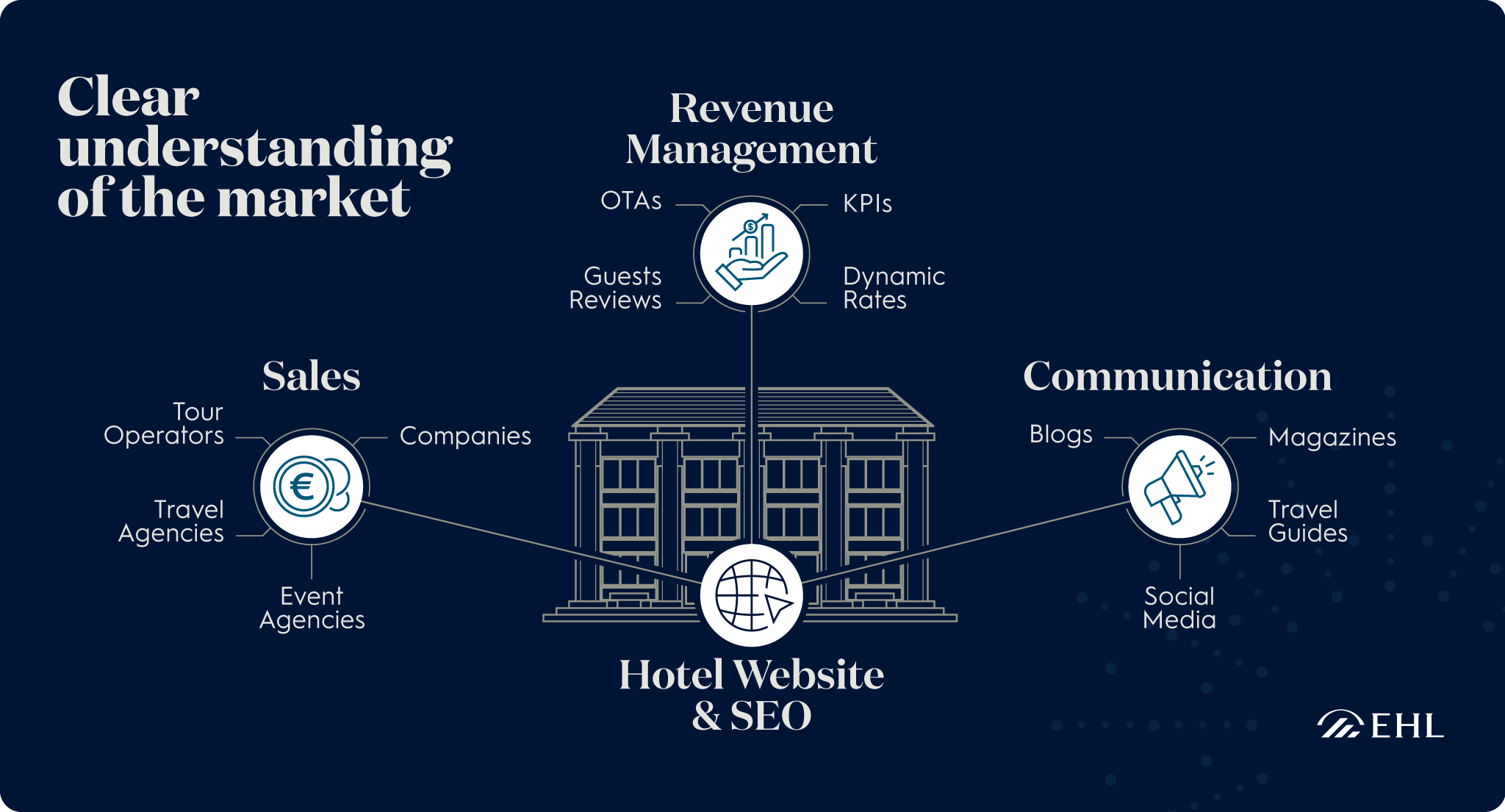
Define a Clear Market Positioning
Positioning is a vital component of a hotel marketing strategy. It defines the commitment your hotel makes to its guests, the experiences it offers, and the specific audience it aims to attract.
Many hotels inadvertently weaken their brand by trying to appeal to everyone, which complicates premium pricing, creates confusing messaging, and can result in inconsistent service delivery.
A well-defined positioning strategy considers the hotel's physical attributes, location, service model, local culture, and guest expectations.
It acts as an internal compass that guides marketing decisions, experience design, and storytelling. When the message conveyed online aligns with the actual experience provided on the property, guests are more likely to trust the brand and share that trust with others.
Build a High-Performing Digital Foundation
A hotel's digital presence functions as its primary storefront. Most travelers initiate their journey online, often starting with a mobile search. This emphasis makes the hotel website, Google Business Profile, and online distribution channels essential for success.
A well-optimized website should be fast, mobile-friendly, feature high-quality photography, and be easy to navigate. Guests should be able to complete the booking process in just a few intuitive steps.
Photography is one of the most influential aspects of digital marketing for hotels. It appears on various distribution channels, from online travel agencies (OTAs) to social media.
Low-quality images can undermine even the best marketing strategies, while strong visual storytelling can enhance click-through rates, build trust, and help guests envision their experience.
Furthermore, hotels must expand their online presence.
Travelers often browse multiple sites before making a booking decision. Consistently appearing across OTAs, review platforms, destination directories, and search results ensures that the property remains visible at every stage of the decision-making process.

Review Management and Social Proof
Review platforms swiftly influence travelers' perceptions, much more so than traditional marketing methods. Positive reviews build credibility, while unanswered negative reviews can damage trust.
Since guests often take the initiative to share their negative experiences, it's crucial to encourage satisfied guests to share their positive feedback as well. Responding quickly, honestly, and professionally to all reviews shows that the hotel listens to its guests and cares about their experiences.
Effective review management can also affect rankings on popular platforms like Google, TripAdvisor, and Booking.com.
These platforms reward businesses that engage with reviews in a timely and consistent manner. By integrating review management into your daily routine, you can enhance your reputation and increase your potential for revenue.
Use Technology to Personalize the Guest Experience
Technology is now a vital differentiator in the hospitality industry. When used thoughtfully, it enhances, rather than replaces, human service. Hotels can analyze guest behavior, automate communication, and tailor offers with unprecedented precision.
Digital tools support pre-arrival planning, upselling opportunities, loyalty messaging, and post-stay engagement. Features such as virtual tours, mobile check-in, AI-driven personalization, and automated email sequences enable hotels to maintain connections with guests before, during, and after their stay.
Moreover, technology improves operational efficiency, allowing staff to focus on meaningful service interactions instead of routine tasks. When combined with a service-oriented culture, these tools create a seamless and memorable guest experience.
How to Build a Modern Hotel Market Strategy
Hotels looking to strengthen or reinvent their strategy can follow these practical steps:
- Define Your Core Audience: Identify the segments that bring the most value to your hotel, such as business travelers, families, couples, or groups. Tailor your offers and messaging to cater to each of these segments.
- Audit Your Digital Presence: Review your website, photography, Google Business Profile, online travel agencies (OTAs), and social media accounts to ensure they align with your brand and objectives. Look for inconsistencies, outdated content, or missing information.
- Create a Unified Brand Story: Make sure your brand positioning is consistent across all platforms. The narrative you present online should reflect the experiences guests have on-site.
- Implement a Direct Booking Strategy: Improve the usability of your website, clearly communicate your unique value proposition, and offer incentives to encourage guests to book directly instead of through intermediaries.
- Activate Dynamic Revenue Management: Move away from static pricing. Begin adjusting your rates based on demand patterns, seasonality, and local events.
- Automate Communication Where Appropriate: Use email and SMS automation to send confirmations, pre-arrival information, upsell opportunities, and post-stay surveys.
- Monitor Your Performance: Track key metrics, including traffic sources, conversion rates, review sentiment, and revenue results. Use this data to refine your strategy every quarter.
By following these steps, hotels can better align their digital tools, guest experiences, and operational decisions with a modern market approach.
Invest in High-Impact Digital Marketing
Digital marketing is continually evolving, but its core principle remains consistent: marketing efforts should align with business goals instead of simply following trends.
When tailored to the appropriate audience, strategies such as paid search, social media, SEO, and influencer partnerships can produce impressive results.
Social media platforms provide hotels with the opportunity to showcase local attractions, user-generated content, behind-the-scenes experiences, and unique features that distinguish their properties.
Influencer partnerships can be particularly effective when the influencer’s audience matches your target market, whether that includes wellness travelers, family vacationers, or culinary enthusiasts.
Furthermore, email marketing remains one of the highest-performing channels because it allows for direct communication with guests without interference from algorithms. By segmenting your audience and personalizing messages based on their travel reasons, you can significantly enhance conversion rates.
Ultimately, digital marketing is most successful when it bolsters the hotel’s strategic positioning and directly contributes to demand generation.
A Human Service Experience
While technology plays a vital role, it cannot replace the essence of hospitality: meaningful service. Guests may overlook minor inconveniences, but they rarely forget indifference.
A culture of service must embody the hotel's brand promise and be evident in every guest interaction. Effective management relies on training, empowering, and communicating with staff.
When employees fully comprehend the hotel's positioning, they can create experiences that feel aligned and intentional. This human element enhances loyalty and often becomes the key factor that keeps guests returning.
Proactive Communication
Proactive communication is essential at every stage of the guest journey. Hotels that maintain regular contact with guests tend to receive earlier bookings, enjoy greater engagement, and foster stronger loyalty.
By sending personalized emails and SMS messages, hotels can ensure that guests receive timely information, tailored offers, and relevant updates. Moreover, effective communication enhances revenue management by securing bookings earlier in the process.
With better visibility into future demand, hotels can make more informed pricing decisions. This alignment between communication and revenue strategy contributes to long-term commercial stability.
Hotel Marketing Strategy for Future Value
A successful digital hotel marketing strategy integrates positioning, visibility, technology, guest engagement, and operational alignment.
This approach enables hotels to communicate a clear message, provide valuable experiences for their guests, and maintain a competitive edge in an increasingly digital landscape.
Hotels that thrive will be those that remain curious, embrace innovation, foster a culture of service, and approach the future with a thoughtful blend of strategy and humanity.
In today’s environment, hotel marketing strategy is not just a document; it is an ongoing commitment to understanding guests, adapting to change, and delivering value in ways that resonate.