




Every hotel department's output influences the guest experience, from the marketing and advertising campaigns guests see to the quality of your room service and the ease of your check-out process.
The hotel customer journey ties it all together, highlighting the moments when you can wow or disappoint guests and convince or deter prospects.
Key Takeaways:
- Mapping out the hotel customer journey is crucial for improving customer satisfaction, increasing bookings, and driving loyalty.
- The hotel customer journey is rarely linear.
- If the last impression you leave on guests is a bad one, that will color their entire experience.
What Is the Hotel Customer Journey?
The hotel customer journey encompasses all stages and touchpoints a hotel guest passes through when booking and executing a stay, from being inspired to go on a trip to, hopefully, giving you glowing post-stay feedback. It consists of every time they see and interact with your brand, online and offline.
The hotel customer journey includes six key stages:
- The Inspiration and Awareness Stage: Potential guests get inspired to go on a trip or learn that they need to travel somewhere.
- The Consideration and Planning Stage: Potential guests start researching accommodation options and include your hotel in their consideration set.
- The Decision and Booking Stage: The traveler decides to book at your hotel and takes that action.
- The Pre-Arrival Stage: The period of time between when someone books with you and the moment they check in.
- The Occupancy Stage: The time a hotel customer spends at your hotel.
- The Post-Stay and Loyalty Stage: The part of the guest journey that starts the moment a guest checks out.
These are a bit different from the traditional five customer journey stages (Awareness, Consideration, Decision, Retention, Advocacy) because of how much time often passes between the purchasing stage and the loyalty stage.
Guests can decide to cancel their stay after having booked, which means you need to keep them engaged until the time of check-in. The occupancy stage is also rather unique:
- It lasts across at least two days (vs ordering a meal to eat right away)
- It has a clear endpoint (vs buying a shirt you can use for as long as it lasts)
Each of these six stages influences the likelihood that someone will book with you and become a loyal hotel customer.
Before we have a look at them, it's important to note that the customer journey is rarely linear. Someone might get inspired to take a trip, start looking for hotels, and even check your rates. But then life happens, and they postpone their trip, or they become unsure of where they want to go and return to researching destinations.
1. The Inspiration and Awareness Stage
During this stage, prospects get inspired to take a trip, but they may not have a particular destination in mind yet. Alternatively, they may become aware that they need a holiday or will soon need to travel for work.
Inspiration for leisure travel can come from social media, travel magazines, friends' travel stories, and a range of other places.
How to move potential guests from dreaming about a trip to Including Your Hotel in Their Consideration Set
You'll have little data about travelers who are at this stage of the guest journey, so you want to attract those who are either inspired by the type of experience your hotel offers or the type of destination you're located in. This way, you can move them to the consideration and planning stage.
You can do this by creating and distributing inspirational content wherever your target audience is most likely to see it. That includes relevant social media platforms, Google, and relevant niche channels.
2. The Consideration and Planning Stage
Once prospects move to the consideration and planning stage, they know where they want to go and are actively looking at hotel websites, filtering through hotels on online travel agencies (OTAs) like Booking.com, and searching the web.
They likely have a type of hotel, preferred location, and budget in mind.
How to Convince Potential Guests to Book With You vs Your Competitors
Travelers in this stage often have a type of hotel, preferred location, and budget in mind, so those are the elements you want to target them with, regardless of where you reach them. They might also want to visit certain local attractions or travel to attend an event.
When someone wants to stay at a hotel near Covent Garden in London, and that's where your hotel is, you can include Covent Garden in social media imagery and use search engine optimization (SEO) to rank in search engines like Google and Bing for search terms like "hotel near Covent Garden London."
At this point of the customer journey, it's also important to have positive guest reviews across platforms (Google Hotels, OTAs, etc.). According to Expedia Group's 2025 Traveler Value Index, 76% of consumers would pay more for a hotel with better customer reviews, and a survey of consumers across 17 internal markets found that 42% of them rely on consumer reviews when booking accommodation.
Lastly, you can include dynamic room rates in your ad copy and on meta engines like Google Hotels.
3. The Decision and Booking Stage
This point in the customer journey is crucial. Someone has decided to book with you, and multiple factors decide whether they'll book with you directly or through another platform.
- They might already be a part of your loyalty program and thus prefer to book directly with you.
- They might get benefits when booking through their preferred OTA.
- They might get credit card points when booking in a certain way.
How Not to Lose Potential Guests During the Booking Process
At this stage, you can often win more direct bookings by either offering lower rates than other platforms do or by offering perks for direct bookings, such as free breakfast or a complimentary room upgrade.
At a minimum, your booking engine should make booking an effortless experience. Make sure it loads quickly, is easy to navigate, and doesn't ask for more information than you truly need to make booking quick and easy.
You also want to ensure your website and booking engine are user-friendly and mobile-friendly so guests can smoothly make direct bookings from any type of device.
4. The Pre-Arrival Stage
During the pre-arrival stage of the guest journey, you can build anticipation, communicate about logistics, and promote upsells and cross-sells. It's also when you may receive guest requests for a quiet room or to attend to dietary requirements.
This is really where the guest experience begins, and how you handle this stage will influence how engaged and excited guests feel the moment they check in.
How to Keep Future Guests Engaged and Increase Your Revenue per Room
Automated email marketing is ideal for keeping guests engaged pre-check-in. You can prepare a sequence with messages tailored to how far away one's stay is, rather than randomly emailing future guests.
Examples of pre-check-in emails to include:
- A booking confirmation email including all the practical details.
- An upsell or cross-sell email that suggests room upgrades, adding on breakfast, etc.
- A "know before you go" email with practical information around check-in and check-out times, how to get to the hotel, and tips for local attractions. This is also an opportunity to offer on-site dining or local experiences.
- A practical check-in email with your contact details, all of the booking's details, and specific check-in instructions (smart lock codes, check-in times, etc.)
5. The Occupancy Stage
The occupancy stage makes up the core of the guest experience. It doesn't matter if everything went great until check-in time; if you're not providing exceptional service, guests will spread the word, guest satisfaction scores will decline, and repeat visits will be harder to generate.
How to Deliver an Exceptional Customer Experience
To provide a positive guest experience, you first and foremost need to meet guest expectations. If you want to make a lasting impression, you need to exceed them.
For the former, deliver everything your promotional material has promised, and don't forget about the basics:
- The cleanliness of the room.
- Comfortable bedding.
- The quality of hotel amenities.
- Your 24-hour room service truly being available around the clock.
- Timely and positive responses to guest requests.
Turning a positive guest experience into an exceptional one often comes down to personalization. By analyzing guest behavior and adapting your service to it, you can make guests feel seen and valued.
Successful hotels don't force their housekeeping staff to clean and tidy every room in the same way, for example. They'll make sure toiletries go back to where guests chose to put them, water is refilled when guests need it, and room temperatures default to the guest's preference.
Lastly, it's crucial to create a positive check-out experience. This moment with your front desk is often the last time guests interact directly with your staff, and thus a major opportunity to send them off smiling.
For modern travelers, an easy check-out might be a mobile check-out that delivers their invoice via email, while the average guest will likely want to check their bill and perhaps even get a paper invoice. Attuning to the needs of your audience is key at every stage of the guest journey, and front desk staff need to understand that includes the check-out process.
6. The Post-Stay and Loyalty Stage
The post-stay stage could also be called the sharing stage, as this is when guests tell their friends and family about you. It's also your chance to keep the guest journey going through email and other types of marketing.
The latter is crucial if you want to encourage repeat visits, promote your loyalty program, and get more positive reviews for your hotel.
How to Create Loyal Guests and Brand Advocates
You can encourage post-stay engagement by sending a thank-you email after each stay and asking guests for online reviews. How and where guests share feedback matters, so don't hesitate to include a link to your Google Maps listing or any other platform where you'd like to generate more reviews.
Your post-stay follow-up can also remind guests to fill out a post-stay survey. These can provide valuable information about how you can improve the customer journey and help you calculate overall guest satisfaction.
Including a personalized offer is a great idea to encourage future bookings, as is inviting guests to join your loyalty program.
The Importance of Mapping Out the Hotel Customer Journey
A customer journey map, or in this case, a hotel guest journey map, outlines each hotel booking path guests can take from the moment they first come into contact with your brand until after they've checked out.
It isn't until you create a hotel customer journey map that you get a full view of all the possible touchpoints along the hotel guest journey. Without those, you might miss pain points in your booking process, opportunities to drive pre-arrival guest engagement, or improve your service based on post-stay guest feedback.
Designing a hotel customer journey map is also important to:
- Offer personalized services across the guest journey.
- Generate a higher return on marketing and sales efforts.
- Increase upsell and cross-sell revenue.
- Improve your hotel's reputation.
Creating a Hotel Customer Journey Map
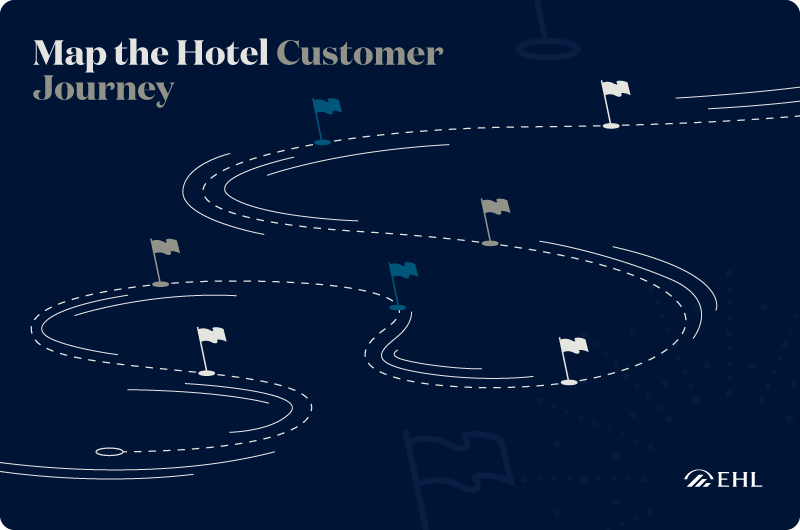
Creating a map of each possible hotel guest journey, with its many touchpoints and key moments, requires a lot of analysis and strategic thinking. Here's how to get started.
Analyze Guest Data
Who are your guests? How did they book? Why were they traveling? And what feedback did they give about their guest experience?
How many guests return, and who are these returning guests? Which behaviors or characteristics do they have in common?
Which guests tend to leave the most positive reviews? What did their hotel booking journey look like?
Answering these and other guest preferences can help you determine:
- What inspires future travelers to consider your hotel.
- What makes them book.
- What makes them return.
Create Guest Segments
Once you've analyzed your guest data, you can create guest segments based on their behaviors, preferences, and typical guest journey. This makes it easier to tailor your marketing campaigns and personalize your approach based on guests' desires and needs.
Analyze Industry Reports
Analyzing industry reports and keeping up-to-date with hospitality industry trends should come second to analyzing your own data, but it can still be useful to fill in gaps or bring new ideas of how your guests might end up booking with you.
Identify Key Touchpoints
Now that you have a good idea how, why, and when guests interact with your hotel, you can identify key touchpoints across the hotel guest journey. Examples could be:
- When you show up as the first result for a search term they entered on Google.
- When travelers see one of your ads on Instagram.
- When future guests look up room rates on your website.
You want to list the moments in which you can guide travelers further down the customer journey and also when you risk losing them.
Put Together an Emotional Journey Map
Once you've defined your guest segments and the key touchpoints in their respective guest journeys, you can combine both to create an emotional journey map.
An emotional journey map outlines the emotions a prospect might feel during each stage of the customer journey. With it, you can influence and steer that journey to deliver a better experience, as well as identify areas of improvement.
Imagine knowing that your guests find it stressful to make a big purchase, like a week-long holiday. They repeatedly check rates, Google things like "*your hotel name* discount," and book more easily when you have a promotion. You could offer a flexible cancellation window and a lower price when they book with you directly, rather than through an OTA, to make them feel more confident about their choice.
Define Desired Customer Actions
Your next step is to decide which actions you'd like future guests to take each time they come into contact with your brand, depending on the stage of the customer journey they're at and taking into account their assumed emotional state.
Here are a few examples: 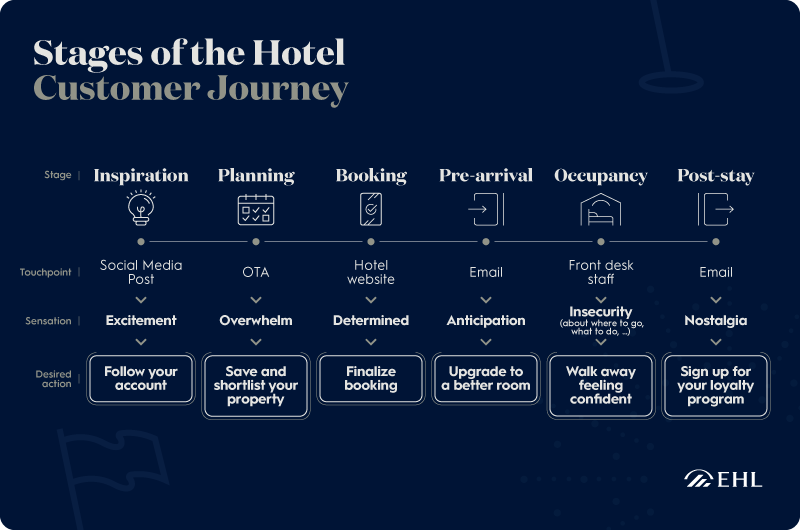
Map Out What Needs to be Done
Now that you have your customer journey map, analyze what needs to be done to elevate the hotel guest journey.
- Where do you need to create extra touchpoints?
- At which stages of the customer journey could you be more present?
- Which pain points do you need to address? Go over everything from your marketing campaigns to hotel operations.
- What is working well, where are prospects dropping off, and which touchpoints cause customer satisfaction to drop?
Implement > Track > Improve
Optimize for each stage of the customer journey and track the results of your efforts against previously set goals and benchmarks.
Ideally, you'll revise the guest journey map periodically. It's the one thing that gives you the full picture of how you're performing, from when a guest's journey begins until long after they've checked out.
Create Your Hotel Customer Journey Map Today
Hotel customers begin their journey with you long before they book, and each touchpoint with your brand influences the likelihood that they'll book with you, leave a positive review, and return.
With different departments responsible for different aspects and phases of the guest experience, it's easy for gaps to occur along the hotel customer journey. Mapping out that journey allows you to figure out what works, what needs improvement, and where you can add extra moments in the chain that leads future travelers to your property.