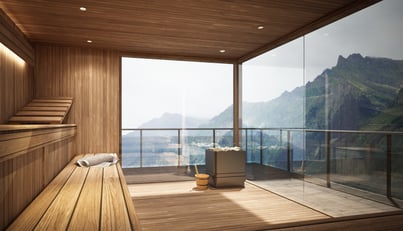

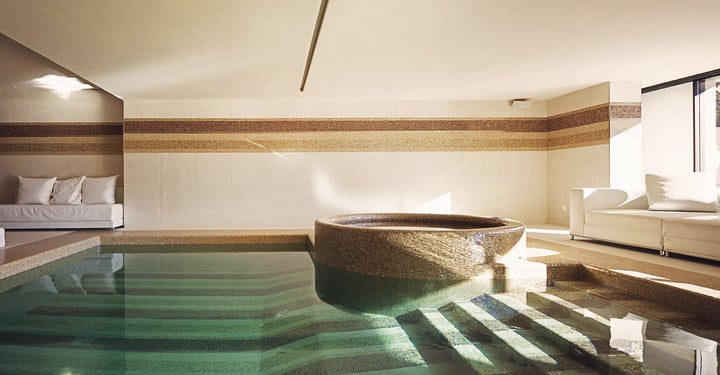


The spa has come a long way from the hotel basement, with a massage table and a jug of cucumber water. It has also come a long way from the marble halls of Karlovy Vary, where physicians once prescribed a six-week, water therapy-based cure for patients.
Before being seen as a treat-yourself thing, spas were first and foremost medical institutions, and they are currently on their way back.
This article looks at the origins of the spa, how big the global spa industry is today, spa industry trends that are spurring its growth, the state of spa tourism, and what the next decade looks like for operators.
A Short History Of the Spa Industry
To understand the current state of the industry and where it is headed, it’s worth it to have a brief look at the roots of spas and their evolution to how we have come to understand them today.
Bathing in mineral water as a therapy is one of the oldest healing modalities in the history of humanity. Its long tradition has even sparked its own medical discipline where thermal and mineral water treatments are studied clinically as balneotherapy, which has a documented history of more than four thousand years.
Water-based therapy has evolved independently in different time periods and parts of the world, such as in Roman, Ottoman, Japanese, and Nordic cultures. The word ‘spa’ itself comes from the Belgian town of Spa, which is one of the earliest European destinations built around a healing spring (however, I prefer the most likely invented theory that it’s an acronym of the Latin phrase salus per aquam, which means ‘health through water’).

The version that we now think of when hearing ‘grand spa’ comes from around 1700, when European spa towns started utilizing mineral springs as colonnades, bathhouses, theaters, assembly rooms, and landscaped promenades.
After the 1930s, cure towns like these gave way to pharmaceuticals and modern (hospital) medicine, and the spa lost its clinical mandate.
Throughout the second half of the twentieth century, the spa became a place of leisure, and by the 1990s, we had arrived at the American day spa and the hotel spa, places solely for pampering rather than treatment. The International Spa Association was founded in 1991, and when it commissioned the first PwC study of the US market in 2000, it measured a $5 billion industry.
Now, the spa is regaining the clinical function it was sidelined from nearly a century ago, with the hospitality industry leading the way.
The Spa Industry In Numbers
The Global Wellness Institute has tracked the sector since 2008, when its first count found 71,800 spas earning $47 billion in 2007. By 2024, that pool had grown to 201,861 spas that generated roughly $157 billion in revenue, with a 7.4% annual growth rate over those seventeen years.
Still, spas are one of the smaller sectors inside the wellness economy, valued at $6.8 trillion in 2024, and forecasted to grow to nearly $9.8 trillion by 2029. However, spas are one of the first things that come to mind for many on the topic of wellness.
When it comes to operations, we know from the US spa market that the industry is currently making more money per guest rather than attracting more guests, as from 2024 to 2025, revenue grew by 4.2% and visitors only by 1.8%.
The medical spa segment is the fastest-growing within the spa industry and was valued at $24.2 billion in 2025 and is forecast to reach $78.2 billion by 2033 at a 15.9% compound annual growth rate.
Growth Drivers Of the Spa Industry
According to the GWI, the spa industry’s steady and continued growth can be attributed to rising incomes, the expanding global middle class, a greater consumer propensity to spend on health and wellness, and the growth of wellness tourism.
The latter has the strongest link to the growth of the spa industry, as a spa visit is often the centerpiece of a trip dedicated to wellness.
Moreover, consumers’ understanding of health has expanded to include preventative health, which means that wellness and spas increasingly fall under this category. Wellness spending is now at the same rate as 60% of the size of all global health expenditure.
Spa Industry Trends to Watch
While the spa industry and consumer expectations are evolving rapidly, there are a few defining trends that investors and operators should consider. Wellness consumers are increasingly interested in preventive wellness, health optimization, and, especially in the luxury segment, personalization that brings tangible results beyond the treatment room.
Medical spas and the aesthetics boom
The medical spa has become the buzz category of the 2020s. In addition to conventional spa treatments, med spas offer more invasive procedures that require clinical practitioners to perform, such as IV therapy, laser treatments, and other skin therapies; dietary and lifestyle guidance; and increasingly, weight loss treatments and GLP-1.
The global med-spa market is expected to grow at nearly 16% a year through 2033, which is several times faster than the wider spa industry. Furthermore, the American Med Spa Association reports that the US medical aesthetics sector has passed $17 billion and is growing by more than $1 billion a year. The aforementioned weight loss treatments are one of the most significant drivers of this stark growth.
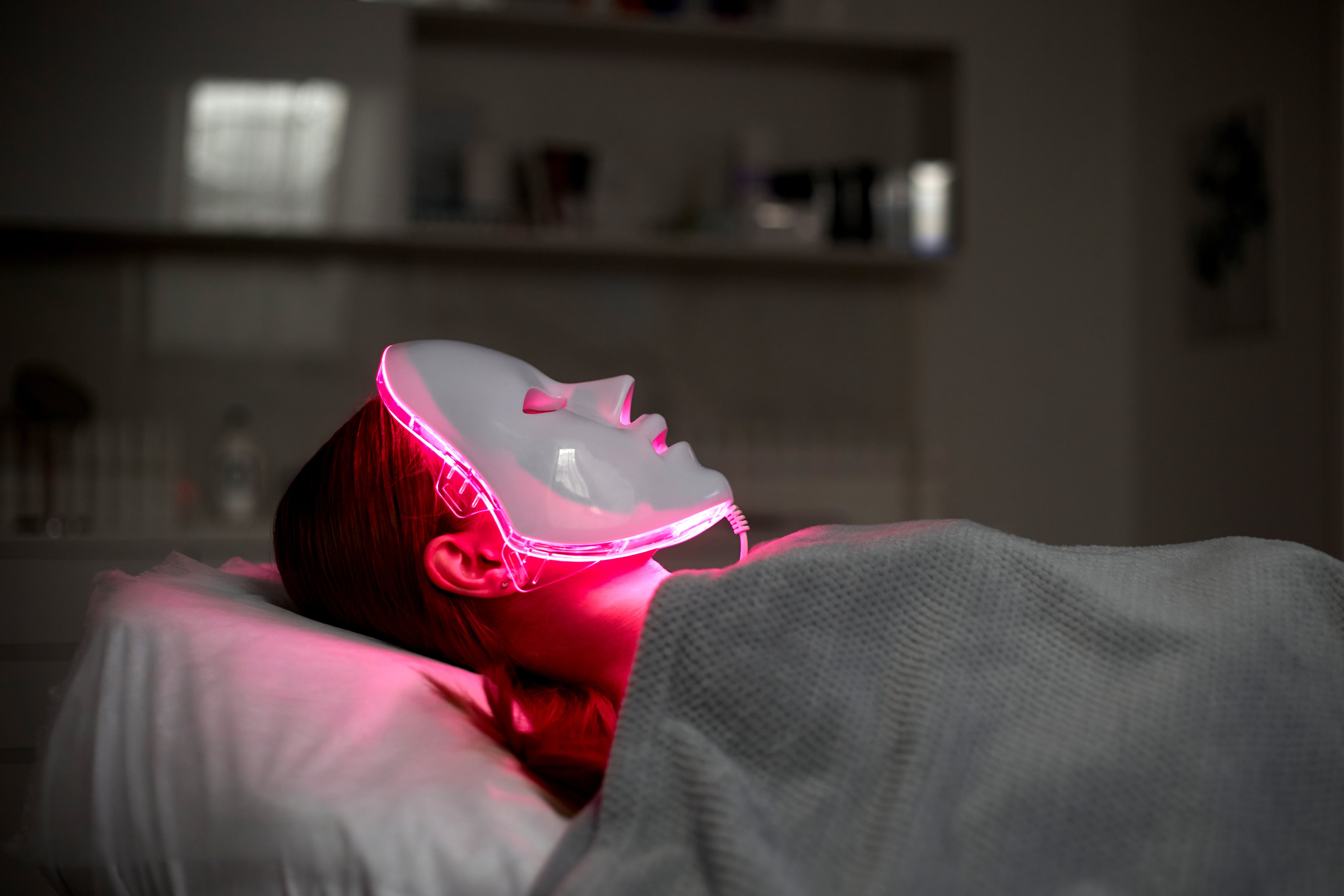
An analysis of the US market found that patients spent $1.30 billion on GLP-1 medications at medical aesthetic practices in 2024, which was 75% more than the previous year, and the share of lifestyle and dietary treatments has risen to 12% of non-surgical treatment spend, compared to 2% in 2021.
Longevity and results-driven wellness
Another growth driver behind medical spas is an overall trend of guests looking for measurable outcomes. Operators are pushed to offer diagnostics and biomarker testing with the rising popularity of biohacking and longevity.
Longevity and biohacking modalities are now standard in wellness centers, and the $147 billion personalized medicine market is expected to grow 9.3% annually as consumers pay directly for diagnostics.
For spas, the practical consequence is a shift away from generic treatments towards more rigorous protocols that offer guests trackable results.
Technology and personalization
The trend of results-driven wellness is closely tied to technology and the personalization it can enable. AI skin analysis and tech wearables such as the Oura ring collect data that spas can use to tailor treatments to the individual and even track progress over multiple visits.
As is the case with the hospitality industry overall, human contact is still in many cases irreplaceable at spas (although robot massage therapists are already deployed). Operationally, however, technology is still best used to streamline back-of-house functions such as bookings and communications.
Nervous system regulation and psychological wellbeing
Psychological wellbeing has gained more awareness in the past decade and is in fact one of the fastest-growing sectors of the wellness economy.
To this demand, spas (and hotels) have responded with programs that focus on sleep and mindfulness, as well as nervous system regulation. Wellness-inclined consumers are looking for ways to support the body's ability to smoothly move between stress and a state of safety.
The Renaissance of Spa Tourism and Social Bathing

Spa tourism is experiencing a renaissance led by the thermal and mineral springs sector, which the Global Wellness Institute has highlighted as the standout growth market of the next five years. GWI counts that between 2020 and 2025, 365 new thermal projects geared for bathing opened, and there are more than 250 in development.
Alongside these traditional thermal resorts, sauna culture and bathhouses offering contrast therapy are becoming social hubs in a time of increased loneliness and disconnection. This development has widened the spa audience from the traditional massage-goer to those looking for more communal and accessible experiences.

The new generation of sauna and bathhouse businesses that are popping up are often very design-led and converge with the longevity and tech trends mentioned above. Spots such as the US-based Remedy Place define themselves as social wellness clubs and function as complementary spaces or even replacements for traditional gyms.
The Future of the Spa Industry
Three big movements will continue over the next decade.
Firstly, the industry will continue to medicalize in a way where the line between spa and clinic will blur, and guests will come to expect clinical credibility from operators in addition to comfort and pampering.
Secondly, personalization will become deeper as various data metrics become even easier to track and move across interfaces in protected ways. One-size-fits-all treatments will increasingly be replaced by those that deliver measurable results.
Thirdly, the audience of the spa industry will broaden as its offerings of aesthetics and social bathing will attract new demographics.
But medicalization is not the only way to win the guest.

The spa is reverting to its original function as a medical establishment after a century-long stint as a leisure product. As guests become more wellness-conscious, offerings must expand to hold both ends of the spectrum—offering great results but never forgetting to focus on good old hospitality. Yes, we want to optimize, de-stress, and recover, but do so in a beautiful and relaxing environment.