
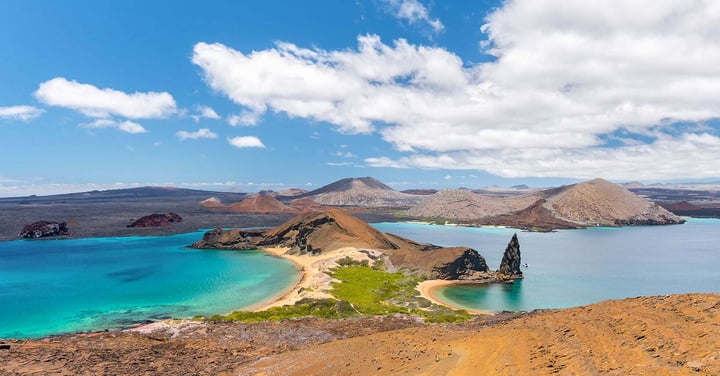



The Galapagos Islands played a pivotal role in the development of human understanding. The island, with its rich and unique flora and fauna, helped Charles Darwin formulate the ideas that formed the basis of The Origin of Species.
Today, the islands are often portrayed as an untouched paradise, home to giant tortoises, marine iguanas, and crystalline waters, far removed from global turbulence.
Galapagos Islands ecotourism tries to strike a balance between protecting Galapagos wildlife and the precious natural environment and generating essential tourism income for the islanders. But in such a fragile and precious environment, is a Galapagos eco-friendly vacation truly possible?
The Galapagos Islands Today
The ecosystem on the Galapagos Islands is one of the most unique, and therefore most vulnerable on the planet. Tourism, climate disruption, economic inequality, and the ongoing impact of the pandemic have each reshaped how the islands function and communities survive.
Today, the region is at a crossroads with considerable challenges ahead. Working out how to safeguard the world’s most extraordinary biodiversity while supporting a thriving local economy is creating a new impetus towards innovation.
A new model of Galapagos islands ecotourism, one that protects wildlife, empowers communities, and ensures the long-term biological integrity of this global treasure, is gradually coming into being.
While sustainable Galapagos trips and responsible wildlife tours have long been marketed to visitors, the islands are looking to move beyond mitigation to a model that regenerates landscapes, stabilizes communities, and preserves the islands for future generations.
A Shock to the System: How the Pandemic Reshaped the Galápagos
The COVID-19 pandemic sent shockwaves around the globe, and in the Galapagos Islands, the impact was severe.
Located 1,000 km off mainland Ecuador, the Galápagos Islands form one of the world’s most iconic UNESCO World Heritage Sites. Before the pandemic, tourism had been expanding rapidly from 68,989 visitors in 2000 to 271,238 in 2019, according to the Ecuadorian Ministry of Tourism.
While many environmentally conscious travelers sought out eco-friendly trips, the sheer number of visitors to the islands put pressure on wildlife, island infrastructure, and fragile species. Then, the pandemic halted this growth overnight.
According to the UN World Tourism Organization, global international arrivals dropped 74% in 2020, a precipitous decline that the islands felt acutely.
When Nature Reclaimed the Islands
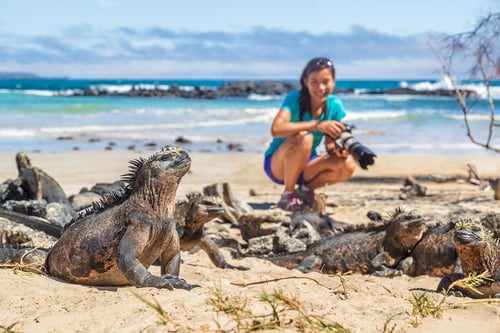
Dr Maria-José Barragán, Scientific Director of the Charles Darwin Research Station, described the lockdown as a moment when “nature reclaimed the islands,” with sea lions sleeping on park benches and marine iguanas roaming freely through towns. Without people, wildlife returned to spaces typically occupied by tourists.
This ecological breathing space came at a cost for the human communities who live on the islands. With tourism nearly disappearing, hundreds of small businesses collapsed. Hotels across the islands reported severe financial distress, and support businesses that relied on the tourism industry went to the wall.
The cash-strapped Ecuadorian government was unable to provide much assistance, and by 2020, nearly 80% of hotels in the islands had laid off staff or closed. The tourism industry, which had long been both a lifeline and a threat to the islands, suddenly seemed unsustainable in its current form.
In this moment of crisis, an opportunity arose to rethink how tourism was conducted on the island. Whereas talk of new starts in much of the developed world seemed to be quickly forgotten, in the Galapagos Islands, it was a necessity.
A Turning Point for Galapagos Sustainable Tourism
The pandemic pause highlighted just how deeply the islands' economy depended on mass tourism and how fragile that model was. As the islands slowly reopened, many operators, community members, and conservation groups recognized that returning to "business as usual" was neither sustainable nor desirable.
Galapagos Islands ecotourism was not a new idea, with Galapagos eco-friendly hotels an established feature of the island. The sustainability model didn't go far enough and proved just as vulnerable to sudden shocks as traditional tourism.
Islands stakeholders began asking new questions:
- How do we encourage Galapagos responsible tourism without overwhelming ecosystems?
- How do we ensure local communities benefit fairly from sustainable Galapagos trips?
- How do we protect vulnerable species from visitor pressure, pollution, and habitat encroachment?
- How can visitors participate in protecting Galapagos wildlife instead of unintentionally harming it?
Emerging from these questions has been a growing movement towards regenerative ecotourism. This model goes beyond mitigation and minimising harm to actively restoring ecosystems and strengthening community resilience.
Regenerative Tourism: A New Direction For The Islands
The Galapagos are home to more than 9,000 species, many of which are endemic to the islands. They live in a delicate balance with each other, and even the slightest ecological disturbance can alter evolutionary pathways that have existed for millions of years. Greater visitor numbers have posed risks of soil erosion, invasive species, pollution, and animal stress.
To counteract this, Galapagos National Park enforced strict rules, including limits on daily visitor numbers, mandatory use of certified guides, and zero-waste policies. Visitors are required to maintain distance from wildlife, avoid touching or feeding animals, and stay on marked trails.
The tourism industry within the islands works in close conjunction with the National Park, Galapagos conservation bodies, and local authorities to promote sustainable practices.
A regenerative approach to Galapagos Islands ecotourism seeks to move beyond mitigation and an incremental approach toward something more transformative. It aims not only to minimize harm but also to actively restore ecosystems and strengthen communities.
For the Galapagos, this shift has become essential to protect biodiversity while ensuring long-term community wellbeing.
Regenerative ecotourism in Galapagos focuses on:
Rewilding Damaged Landscapes
For example, large-scale habitation restoration projects on Santa Cruz and Isabela are removing invasive plants and reintroducing native vegetation. Highland ecosystems crucial for giant tortoises are being restored. This work is being led by conservation groups and is supported by tourism businesses.
Supporting Endemic Species Recovery
Visitor funded initiatives are helping to protect species like the critically endangered mangrove finch. The Charles Darwin Foundation is coordinating breeding, monitoring, and predator control programs.
Restoring Mangroves and Coral Reefs
Local NGOs working with dive groups participate in marine debris removal and coral restoration nurseries. These are helping regenerate damaged reef systems and boost fish biodiversity
Funding Long-Term Scientific Research
Several tour operators now contribute part of each booking to support ongoing climate and biodiversity research at the Charles Darwin Research Station.
Building Economic Resilience for Island Communities
Regenerative agriculture programs, such as the Galapagos Bio-Agriculture Initiative, are helping local farmers reduce dependence on imports while supplying sustainably grown food to eco-friendly hotels, lodges, and restaurants.
Reducing Dependency on High-Volume Tourism
Local tourism impact models that align with the sustainable tourism guidelines developed by the Galapagos National Park are being adopted across the islands. These prioritise small groups, responsible wildlife tours, and conservation financing.
Fostering Education and Cultural Preservation
Community-led initiatives run workshops that share local culture, conservation awareness, fishing history, and local food traditions. Working with organisations such as the Galapagos Heritage Program, tourism businesses can offer guests deeper engagement with island traditions while financially supporting local culture.
It is relatively early days for regenerative ecotourism on the islands as they look to recover from the shock of the pandemic, while providing firm foundations for future growth.
As a scientific research hub for the natural world, the Galapagos Islands have the opportunity to provide inspiration and knowledge that shape future sustainability trends.
Is Mass Tourism Compatible with Conservation?
Before the pandemic, social media content and globe-trotting influencers were helping fuel a growing tourism boom in the Galapagos Islands. Incredible footage of otherworldly animals and untouched environments was driving rapid growth in visitor numbers.
The pressing concern at the time was how to develop sustainable Galapagos trips at scale that didn’t have an adverse impact on the local environment.
Since the pandemic, that vision is being reconsidered. Experts now argue that the future of the islands lies in controlled, low-impact, high-value tourism that prioritizes high-quality experiences over visitor volume.
A Galapagos Islands ecotourism model offers several potential benefits. Firstly, it generates more income per visitor, as tourists pay a premium for immersive experiences and responsible wildlife tours. This approach also encourages longer stays, with visitors choosing meaningful experiences over quick tourist checklists.
Secondly, it reduces ecological strain on wildlife and the broader environment, as fewer visitors mean less disturbance to habitats and fragile species. Thirdly, the renewed emphasis on environmental responsibility and conservation supports higher sustainability standards across the islands' tourism infrastructure.
Finally, higher margins generated by visitors willing to pay a premium allow for a more equitable distribution of income generated to benefit local communities. This not only strengthens economic resilience it also improves community buy-in.
Protecting the Ecosystem
UNESCO’s past State of Conservation reports have repeatedly emphasized the importance of strictly limiting tourist numbers and controlling land-based tourism growth to protect the unique ecosystem.
Research by EHL Hospitality Business School reinforces this trend, with our current project on the “carrying capacities” of the Galapagos Islands investigating how social, ecological, and psychological impacts should inform sustainable tourism planning.
Local businesses are already adapting, with many Galapagos SMEs adopting a range of environmental practices, such as waste sorting, water-saving measures, and the use of local products, while engaging tourists in conservation.
While the positive steps are recognized, conservation leaders are advocating for increased controls on tourism. A visitor entry fee has been proposed to reduce visitor pressure and fund conservation work.
The local tourism industry needs to adapt to these changes, becoming part of the solution. Developing a sustainable model of Galapagos Island ecotourism, that doesn’t just seek to preserve, but helps to build a resilient and flourishing ecosystem, is a pressing priority.
The Path Forward: Transforming Tourism into a Force for Good
Stakeholders across the islands, from tour guides, to hotel owners, conservationists, and government agencies, agree that the next decade will be decisive.
What needs to happen next?
Rebuild with sustainability at the core - Measurable standard for resource use, energy, waste reduction, and community engagement need to be adopted by hotels, restaurants, and tour operators
Strengthen local capacity - Long-term economic planning and training programs can reduce vulnerability to future crises.
Support conservation research - Funding for species protection is a non-negotiable part of any sustainable future for the islands.
Regulate tourism numbers - Carrying-capacity studies should be used to guide visitor limits.
Educate travelers before arrival - Every visitor should be informed about the importance of the islands, their history, culture and sensitivity. They should also understand the role they can play in protecting Galapagos wildlife.
Promote responsible tourism certifications - Operators who demonstrate best practices should be rewarded for their efforts and promoted accordingly.
Towards a More Resilient Future
The Galapagos Islands remain one of the planet’s most extraordinary and important places, but their future is not guaranteed.
The shift towards Galapagos Islands ecotourism, rooted in a regenerative model and centered on conservation-driven travel, offers a path forward that balances economic needs with ecological integrity.
Combining thoughtful planning with responsible wildlife tours, eco-friendly hotels, community engagement, and visitor education should ensure that the islands can continue to inspire the world while protecting their irreplaceable biodiversity.