


At a Glance
- Energy costs typically account for around 8% of total hotel operating costs, but can climb significantly higher without active management across lighting, HVAC, water heating, and kitchen systems.
- The highest-return interventions are usually HVAC-related: smart thermostats, energy management systems integrated with the PMS, and occupancy-based zoning can reduce heating and cooling costs by 35-45%.
- Low-cost operational changes like LED retrofits, occupancy sensors, housekeeping protocols, and leak detection deliver meaningful savings without capital investment.
- Longer-term, on-site renewable generation and EV charging infrastructure are shifting from sustainability gestures to financially viable assets for a growing number of properties.
Energy costs represent one of the most volatile items on a hospitality balance sheet, but they also offer some of the most controllable opportunities for savings.
While major capital investments in renewables often grab headlines, significant financial relief lies in optimizing daily operations. From smart HVAC zoning to minor adjustments in housekeeping workflows, curbing energy waste doesn't require sacrificing guest comfort.
By taking a look at how your property consumes power, you can build a practical roadmap that lowers utility bills, improves operational resilience, and strengthens bottom-line profitability. This guide explores where hospitality businesses typically use the most energy and the steps that can make the biggest difference.
Energy Audits and Benchmarking
Knowing exactly where your energy goes can be quite an eye opener. While usage varies by property type, climate, and the services on offer, the broad patterns are consistent enough to plan and budget for.
Formal energy audits give you a picture of consumption by system and area. For smaller properties without the budget for a professional audit, the UNWTO HES e-toolkit is a practical starting point. It was designed specifically for SMEs in accommodation and walks operators through a self-assessment that produces a prioritized action list.
Larger properties or those operating across multiple sites can use ENERGY STAR Portfolio Manager, which benchmarks energy and water use against similar buildings and generates a score recognized by certification programs.
Either way, the output of a benchmarking exercise should feed directly into a priority list:
- Low-cost or no-cost operational changes
- Equipment upgrades second
- Capital investment in renewables or infrastructure
Let’s look at the major drain points for wasted energy and explore solutions below.
Lighting
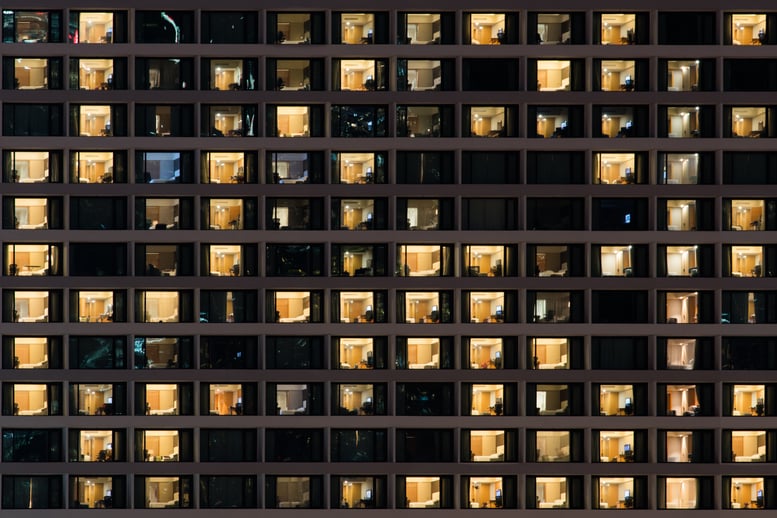
Lighting is usually the most accessible place to start on energy reduction. Upgrades are well-understood, payback periods are short, and the impact compounds across every room, corridor, and back-of-house area.
A full LED retrofit can cut electricity use in that category by 50% or more, with a secondary benefit of reducing cooling loads since less heat is being generated by the fixtures themselves. That alone makes it worth prioritizing before moving to more complex systems. Let’s look at some less obvious solutions to save on lighting.
Occupancy Sensors and Controls
Occupancy sensors eliminate one of the most persistent sources of lighting waste in hotels: fixtures running in empty spaces because nobody thought to switch them off. Motion-detection technology is simple and inexpensive, but the application varies by area and is worth thinking through by zone rather than treating it as a blanket solution.
In guest rooms, meeting rooms, and areas like storerooms and offices, standard PIR (passive infrared) sensors work well because the room is either occupied or it isn't. Restrooms in larger properties benefit from ceiling-mounted ultrasonic sensors, which can detect occupants around partitions and corners where line-of-sight detection fails.
Corridors need a different approach. Guests don't respond well to completely dark hallways, so the standard recommendation is a dimming-plus-sensor setup: lights run at reduced brightness by default after hours, then step up to full when someone enters.
Daylighting and Natural Light Integration
Getting the most out of natural light reduces both direct lighting electricity use and the cooling load that artificial lighting generates as heat. It also costs nothing to use once the conditions are in place, which makes it worth factoring into any renovation or refurbishment project.
For existing properties, the options depend on building type. Low-rise hotels have the most to work with: light shelves, skylights, and solar tubes can all channel daylight into spaces that wouldn't otherwise receive it.
In urban high-rises the options are more limited, but interior layout decisions like positioning high-traffic back-of-house areas near perimeter walls, and using glazed internal partitions can still reduce reliance on artificial light during daytime hours.
Exterior and Signage Lighting
Exterior lighting is easy to overlook because it sits outside the main building systems, but it runs for long hours. Car parks, pathways, façade lighting, and signage are all candidates for the same interventions: LED replacement and automated controls.
Timers and photocell sensors ensure exterior lights only run when it's actually dark, eliminating any wastage for when schedules aren't updated seasonally.
On signage specifically, LED replacements are often bundled into a broader brand refresh or exterior renovation; the energy saving is a bonus on top of an upgrade the property was likely planning anyway.
Heating, Cooling, and Ventilation
HVAC is where the biggest savings are, and also where the most money gets wasted by default. At around one-third of a hotel's total energy consumption, it outweighs every other system, and unlike lighting, it usually runs continuously across the entire building.
Interventions range from low-cost maintenance habits that curb ongoing efficiency losses, to smart controls that actively match conditioning to real occupancy, to full system upgrades for properties with aging infrastructure. The place to start depends on what you're working with.
HVAC Systems and Efficiency Upgrades
The baseline condition for any efficiency work is that the equipment itself is running at spec. Aging HVAC systems that haven't been serviced gradually lose efficiency. Dirty coils, clogged filters, and refrigerant loss slowly add to consumption without triggering an obvious fault.
An annual professional tune-up is the minimum. Filters should be checked monthly and replaced at least every three months regardless of appearance. Restricted filters force the system to work harder to move the same volume of air, which shows up directly on the energy bill.
Blackout curtains and sealing are the other low-cost fix: caulking around windows, doors, and through-wall HVAC units reduces the infiltration that makes conditioning harder to maintain, with weatherstripping on operable windows catching what caulk can't reach.
Smart Thermostats and Energy Management Systems
Smart thermostats are the entry-level version of occupancy-based conditioning. They give per-room temperature control without requiring a full building management system, and they're relatively straightforward to retrofit into existing properties.
The more powerful version is a full energy management system (EMS) integrated with the property management system (PMS) and automated check-out.
When these are linked, unsold rooms can be held in a low-energy ventilation-only mode, and sold rooms can be brought to a comfortable temperature an hour before a confirmed arrival rather than running continuously. Once the guest checks out, the room returns to the unoccupied setting automatically.
For properties looking at third-party platforms, IoT-driven building intelligence tools like DEXMA and Adaptiv Systems sit in this space, offering data-driven monitoring and control that goes beyond basic scheduling.
The common thread is visibility: most properties that install any form of energy monitoring find consumption patterns they weren't aware of, and that alone tends to justify the investment.
Zoning and Occupancy-Based Conditioning
During low-occupancy periods, the simplest lever available is to close down entire floors or wings, and scale back HVAC and lighting in those zones entirely.
To compound that effect, assign guests to adjacent rooms rather than spreading them across floors. This means occupied rooms act as thermal buffers for each other, reducing the conditioning load on each.
Ventilation and Air Quality Management
Ventilation is the part of HVAC that gets the least attention in energy conversations, but it represents a very manageable cost, particularly in full-service hotels where occupancy across different spaces fluctuates significantly throughout the day.
Demand-controlled ventilation (DCV) adjusts fresh air intake based on actual occupancy rather than running at a fixed rate regardless of how many people are in a space. In areas that can go from empty to full and back within hours, the difference between fixed and demand-controlled ventilation is substantial.
CO₂ sensors are the standard trigger mechanism: as occupancy rises and CO₂ levels increase, the system brings in more fresh air; as the space empties, it pulls back.
Kitchen exhaust is a specific case worth calling out. Commercial kitchen exhaust fans are typically sized for peak cooking activity, but in many properties they run at full capacity throughout all kitchen hours regardless of what's actually happening on the line.
Variable-speed exhaust fans tied to cooking activity rather than a fixed schedule are a straightforward upgrade. They reduce both energy consumption and the associated makeup air load, that is, the conditioned air that has to replace whatever the exhaust system pulls out.
Water Heating and Plumbing
Water heating doesn't get the same attention as HVAC or lighting, but in full-service properties it's a significant and consistent load. The US EIA puts water heating at around 20% of end-use energy consumption in hotels (on par with space heating) and in properties with pools, spas, and active F&B operations it sits even higher.
The good news is that the interventions stack well: equipment upgrades reduce the energy required to heat water, while fixture and behavioral changes reduce the volume of hot water being demanded in the first place.
Water Heating Efficiency
High-efficiency condensing boilers and heat pump water heaters both offer savings over conventional systems, with heat pumps in particular delivering more energy output than they consume by extracting heat from ambient air rather than generating it from scratch.
For properties in sunbelt or tropical climates, solar thermal is a practical supplement: it directly offsets gas or electric water heating during daylight hours and pairs cleanly with a conventional system as a hybrid rather than a full replacement.
Pipe insulation is the unglamorous fix that often gets skipped: uninsulated hot water pipes lose heat continuously as water sits in distribution lines between draws, meaning the boiler works harder to maintain temperature. It's a low-cost intervention with a compounding effect across a large property where pipe runs can be extensive.
Low-Flow Fixtures and Water Conservation
The connection between water conservation and energy efficiency is direct but often framed as two separate issues: water as an environmental concern, energy as a cost concern. They're the same problem. Every liter of hot water saved is also a liter that didn't need to be heated, pumped, and in many cases treated.
Low-flow showerheads and tap aerators are the standard entry point. Modern low-flow showerheads deliver a comparable guest experience to conventional ones while using less water per minute.
The tech has improved enough that the tradeoff that existed a decade ago largely doesn't. Dual-flush toilets reduce cold water consumption, which matters for overall water costs even if the energy link is less direct.
Leak detection is another big one. A leaky faucet or toilet flush is both a water and energy waste that compounds across hundreds of rooms. Building a fixture check into the housekeeping or maintenance cycle, rather than waiting for a guest to report it, catches these early.
Pool, Spa, and Laundry
These three systems share a common trait: they run on fixed schedules in most properties, consuming energy at a steady rate regardless of actual demand. That's where the waste accumulates.
Pool and spa heating are among the largest individual loads in resort properties. The most effective intervention is a pool cover: heat loss overnight through an uncovered surface is substantial, and a cover eliminates most of it.
Beyond that, variable-speed pumps replace single-speed units that run at full power continuously; dropping pump speed during low-demand periods reduces energy consumption disproportionately because pump energy scales with the cube of flow rate.
Solar heating is a viable supplement in the right climates, with strong ROI in properties that run pools year-round. Laundry is yet another energy-intensive drain point: hot water, heat for drying, and the sheer volume of cycles in a busy property will surely add up.
Cold-water washing for linens where hygiene standards permit reduces water heating demand without compromising results; modern detergents are formulated to perform at lower temperatures.
Full-load discipline, that is, not running cycles until capacity is reached, sounds basic but is frequently ignored under operational pressure, as are heat-pump tumble dryers that offer efficiency gain over conventional units.
Kitchen and F&B Energy Use
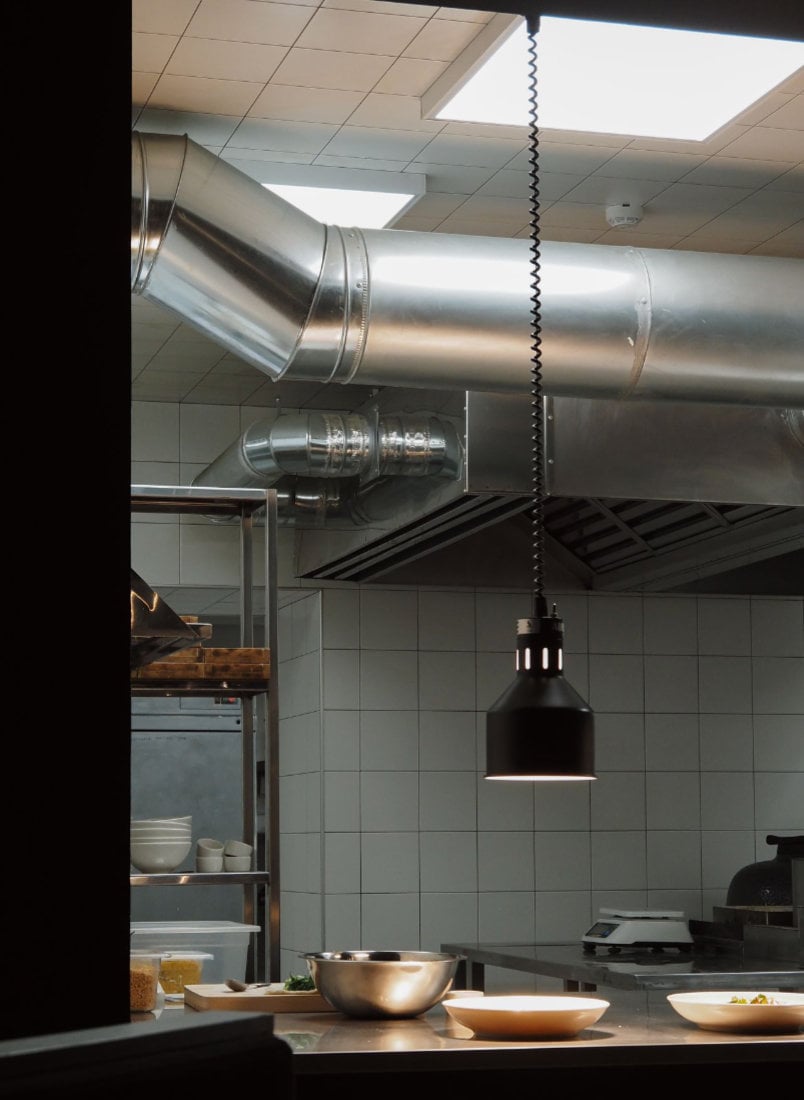
Hotel kitchens are among the most energy-intensive spaces per square meter in any commercial building. They concentrate heat-generating equipment, run long hours, and are often managed independently from the rooms operation.
For full-service hotels, the kitchen and F&B operation can account for 25% or more of total energy consumption, making it a category that warrants the same level of attention as HVAC or lighting.
Commercial Kitchen Equipment
Equipment efficiency is the foundation. ENERGY STAR-rated commercial appliances consume measurably less than standard equivalents running the same workload, and the savings compound across the operating life of the equipment.
The replacement cycle for commercial kitchen equipment is long enough that specifying efficient models at the point of purchase matters more than retrofitting later.
The gas versus induction question is incredibly relevant. Induction cooking transfers around 85-90% of energy directly to food; gas manages roughly 40%, with the rest lost as ambient heat into the kitchen.
This causes two things: lower direct energy consumption, and a reduced ventilation load since less waste heat needs to be extracted. The upfront cost of induction is higher, but for properties undergoing kitchen refurbishments, it’s worth looking into.
Refrigeration
Commercial refrigeration runs 24 hours a day, every day, which makes it one of the most consistent energy loads in any F&B operation. The basics degrade quickly without a maintenance routine.
Door seals harden and crack over time, allowing cold air to escape continuously; coils accumulate dust and grease that impairs heat exchange; inadequate clearance around units restricts airflow and forces compressors to work harder. None of these trigger an obvious fault, but each adds to the running cost.
Anti-sweat heater controls, which regulate the heating elements that prevent condensation on glass doors, are a small but persistent load that can be managed with timers or humidity-sensing controls.
For properties with multiple refrigeration units, consolidating to fewer units during low-demand periods avoids the fixed energy cost of running equipment at a fraction of its capacity.
Food Waste and Energy
Food waste isn’t typically framed as an energy issue, but if you think about it, every item that goes to waste carries the wasted energy of its production, transport, refrigeration, and preparation.
For hotels with large F&B operations, waste reduction is as much an energy and cost discipline as it is environmental.
The practical starting point is measurement. Properties that begin tracking waste by category and meal period consistently find that the volume surprises them, and that the causes are concentrated enough to act on.
This includes over-production at breakfast buffets, mis-sized portions, poor stock rotation leading to spoilage before service. Waste tracking software has become more accessible and integrates with kitchen management systems in a way that makes the data usable.
The energy dimension feeds into broader sustainability reporting for properties pursuing certification under Green Key, Green Globe, or similar frameworks, where food waste metrics are increasingly part of the assessment criteria.
Renewable Energy and On-Site Generation
Reducing consumption is one half of a hotel's energy strategy; changing how that energy is sourced is the other.
On-site generation has moved from a niche sustainability gesture to a financially viable option for a growing number of properties, driven by falling installation costs and the long-term predictability of fuel-free generation.
The entry points vary significantly by property type and location, but the direction of travel is consistent across the industry.
Solar PV and the Prosumer Model
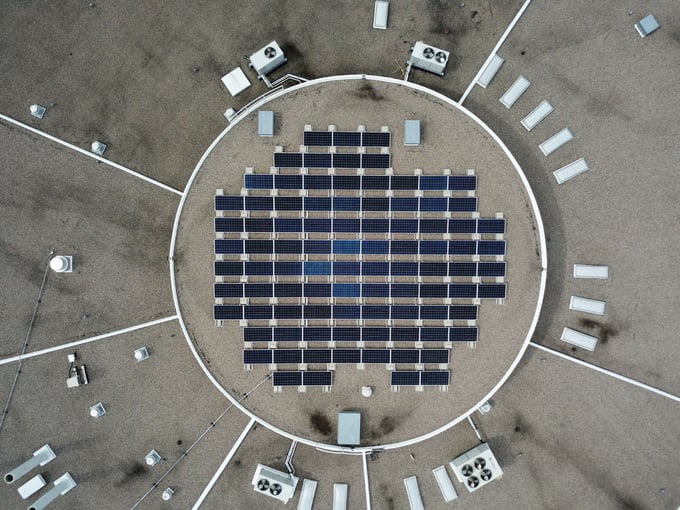
Photovoltaic installation allows a property to generate its own electricity, consume what it needs, and feed surplus back to the grid. It’s a model that turns the hotel from a pure energy consumer into what the industry calls a prosumer.
The asset becomes the property's own once any financing arrangement concludes, which means the long-term economics improve over time rather than remaining static.
Viability is highest for properties with large unshaded roof areas: low-rise hotels, resorts, and suburban properties have significantly more usable surface per room than urban high-rises. That said, even partial coverage helps.
For properties in markets with high solar irradiance and high grid electricity prices, the payback case is substantial. Thailand's hotel sector has been among the more active adopters for exactly this reason, with a growing number of properties diversifying their energy supply through renewables as a direct response to grid price volatility.
Solar Thermal for Water Heating

Where solar PV generates electricity, solar thermal captures heat directly. For hotels with high hot water demand, it's often the more cost-effective of the two technologies. The installation cost is lower than PV, the system is simpler, and the output maps directly onto one of the hotel's largest and most consistent energy loads.
Solar thermal handles a decent share of water heating during daylight hours, with a conventional boiler covering the remainder and acting as backup. This avoids the oversizing required for a full solar replacement while still delivering reductions in gas or electric water heating consumption year-round.
Other Renewable and Low-Carbon Sources
Beyond on-site generation, hotels have several routes to cleaner energy that don't require installing hardware on the roof.
Power purchase agreements (PPAs) allow a property to contract directly with a renewable energy generator at a fixed rate, providing both price certainty and a verifiable claim on renewable electricity.
For hotel groups operating across multiple sites, PPAs can be structured at portfolio level, which improves the commercial terms and simplifies the administrative overhead.
Green energy tariffs from utilities are the lowest-friction option. These involve switching to a renewable-backed tariff through an existing supplier requires no capital investment and can be done quickly.
The tradeoff is less price certainty than a PPA and, depending on the market, varying levels of transparency about what "renewable-backed" actually means in practice.
Interestingly, hydrogen is attracting serious investment as a low-carbon energy carrier. Companies like HiiROC are working on low-cost, zero-emission hydrogen production at scale, and while the technology is not yet at the point of broad commercial deployment in hospitality, it represents the direction a number of operators are tracking.
Biogas from food and organic waste is a nearer-term option for large resorts or hotel groups with the volume to make on-site or local production viable.
Energy Storage
Battery storage bridges the gap between when renewable energy is generated and when it's actually needed. For hotels with solar PV, this typically means storing surplus generation during the day and drawing on it during evening peak demand rather than pulling from the grid at higher tariff rates.
The commercial case has strengthened considerably as battery costs have fallen, particularly for properties in markets with significant time-of-use tariff variation.
Building Operations, Staff, and Guest Engagement
The behavioral layer of energy efficiency is the least capital-intensive and the most dependent on consistency.
Technology can automate a lot, but there's a meaningful share of hotel energy consumption that comes down to what staff do during the course of a normal shift and how guests respond to the environment around them.
Neither requires significant investment, but both require deliberate design rather than hoping good habits emerge on their own.
Housekeeping Protocols

Housekeeping staff move through more of the building more regularly than anyone else, which makes them the most practical first line of energy management.
The basics are straightforward: turning off lights, TVs, HVAC, and other appliances when servicing and exiting a room; using natural light during turnovers rather than switching everything on; closing window coverings on checkout to reduce solar heat gain in summer and heat loss in winter.
Repair reporting is the less obvious contribution. Housekeeping staff are well positioned to spot leaking fixtures, faulty door seals, and equipment running abnormally. These are problems that compound between scheduled maintenance visits. Building a simple reporting habit into the housekeeping workflow catches these early and cheaply.
Guest Engagement and Communication
Guest-facing programs work best when they're framed around choice rather than obligation. Towel and linen reuse programs are the standard example: participation rates are higher when the framing is environmental rather than cost-driven, and higher still when guests feel they're opting in rather than being defaulted into something.
In-room energy information is an emerging tactic: some properties display estimated energy use or sustainability metrics in the room, which nudges behavior without friction.
Opt-in environmental programs tied to loyalty points capture willing guests without alienating others. The ceiling on impact here is lower than in the systems sections, but the cost is low enough that the return is still positive.
Procurement and Equipment Standards
Purchasing policy is where long-term efficiency is locked in or lost. Every appliance replaced on a like-for-like basis without checking efficiency ratings is a missed opportunity that persists for the next decade.
Specifying ENERGY STAR-rated or equivalent products as a default purchasing standard: TVs, minibars, coffee machines, hair dryers, and back-of-house office equipment, builds efficiency into the replacement cycle rather than requiring a separate initiative.
The compounding effect does its thing once again here: a single inefficient minibar in one room is trivial; the same model across 200 rooms running continuously is not. Setting the standard at the point of procurement is the lowest-effort way to ensure the estate improves over time rather than staying flat.
FAQs
Energy efficiency prompts a lot of practical questions from operators at different stages of the process. Some are just starting to think about it, others are mid-implementation and hitting specific obstacles.
The questions below come up consistently across properties of different sizes and service levels, and the answers draw on the strategies covered in this guide.
What is the biggest source of energy waste in hotels?
HVAC is the single largest draw, accounting for around a third of total hotel energy consumption, and the waste comes less from the systems themselves than from how they're operated.
Conditioning unoccupied rooms continuously, running ventilation at fixed rates regardless of how many people are in a space, and deferring routine maintenance all quietly add to consumption.
Addressing those operational habits before investing in new equipment tends to deliver faster returns.
How much can hotels realistically save on energy costs?
Studies put the realistic savings potential at 10-20% for most properties through operational changes and equipment upgrades alone, rising to 25-30% in older hotels or those in high-consumption climates.
Properties that integrate smart EMS with their PMS and implement occupancy-based HVAC control report reductions at the higher end of that range, specifically in heating and cooling costs. The starting point matters: a property that hasn't benchmarked consumption yet is likely leaving more on the table than one that has.
Do energy efficiency upgrades affect the guest experience?
Done well, they're invisible to guests. LED lighting at the right color temperature, smart thermostats that pre-condition rooms before arrival, and low-flow showerheads that maintain adequate pressure are all standard enough now that guests don't notice them.
But they do notice when conditions are uncomfortable, not when efficiency measures are working as intended. The upgrades most likely to create friction are poorly calibrated occupancy sensors and aggressive temperature setbacks that leave rooms too warm or too cold at check-in.
Where should a hotel start if it has a limited budget for energy improvements?
The audit or self-assessment comes first. It's hard to prioritize without knowing where the consumption actually sits. From there, the highest-return low-cost interventions are typically LED retrofits in back-of-house areas, filter and seal maintenance on HVAC equipment, and housekeeping protocols around appliance shutdown.
None of these require significant capital outlay, and together they tend to produce enough savings to build the business case for the next layer of investment.
Looking Ahead
The benefits of energy efficiency extend beyond lower utility bills. Hospitality businesses operate within communities, draw on shared infrastructure, and consume significant amounts of energy and water every day. While a single property's changes may seem small in isolation, the collective impact across the sector can be substantial.
More efficient buildings place less strain on energy networks, reduce resource consumption, and contribute to a more sustainable tourism industry over time. For operators, it's an opportunity to improve performance today while helping shape a future that is more resilient, resource-conscious, and better equipped to meet growing demand.