





As the hospitality industry faces staff shortages and many companies deal with high turnover rates, attracting and retaining quality employees is more important than ever. Without talented staff, it's impossible to deliver a great guest experience, recruitment costs soar, and businesses risk stagnation as human capital is missing.
Simply throwing money at the problem isn't a solution anymore, either. Potential candidates are looking for work-life balance, a healthy company culture, and company values that align with theirs.
Strong employer branding is key to capturing the interest and maintaining the engagement of top talent.
What Is Employer Branding
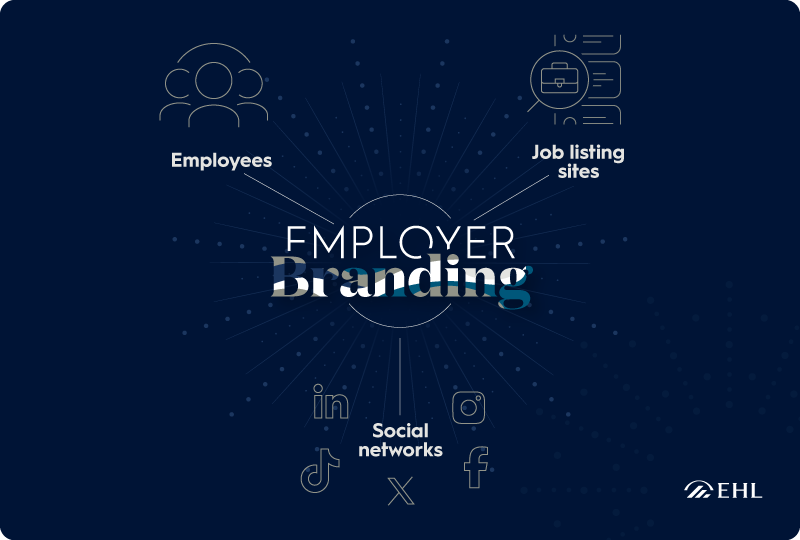
Employer branding is the strategic process of creating a positive perception of your company as an employer in the minds of current and potential employees. It plays an important role in attracting the right candidates and retaining employees who are a good fit for the company.
Employer Branding vs Company Branding
The difference between employer branding and company branding is that employer branding is solely targeted at people who work for you and whom you might want to work for you in the future, while company branding targets consumers.
Despite these differences, company branding can still excite someone to apply for a role at your company, while employer branding can affect how consumers evaluate you. Respective examples of this are:
- a chef who wants to work at a restaurant that markets itself as sustainable.
- a traveler who avoids flying with a certain airline because of the reputation it has of treating its staff abysmally.
In this sense, employer branding is a part of company branding.
Both, by the way, also impact how external stakeholders like investors and vendors perceive you.
The Importance of Employer Branding in Hospitality
Having a great employer brand is crucial for attracting and retaining the right talent for your hospitality business. According to LinkedIn Talent Solutions, it can lower cost-per-hire up to 50%, improve time-to-hire, and reduce turnover by up to 28%.
A strong employer brand also gets you 50% more qualified job applicants and has the power to positively impact financial performance. By shaping company culture and the work environment, effective employer branding positively affects performance.
Hospitality brands need to think beyond remuneration, define what they can and want to offer staff, communicate that clearly, and then deliver. If you pretend to be the type of employer you're not, your people will get frustrated and leave.
Just like customers leave reviews and share experiences with their peers, so will staff talk about what it's like to work for you. And if that image isn't favorable, it will hurt your employer branding.
Developing a Positive Employer Brand

Whether you already have an employer branding strategy or not, you have an employer brand that is shaped by the experiences of candidates who've come to interview as well as past and current employees.
If you're a great employer with high employee retention rates, strong values, and a well-defined mission, maybe that's enough. But why leave your image in the hands of others when you can steer it yourself to attract the people your organization needs?
Audit Your Current Employer Brand (or Lack Thereof)
Before you start changing or communicating your employer brand, you need to audit what it is now. To start, answer the following questions honestly:
- What type of pay and employee benefits does my company provide? How do they compare to what competitors are offering?
- Do we provide opportunities for growth? Do we provide support in this matter?
- How do we measure and reward performance?
- What is our internal communication like, and does it reflect our values?
- Do we have a clear company culture? If so, what does it stand for? What is our work environment like?
- How are current and past employees talking about us online? Have they become advocates, or are they warning people off?
- What about the vendors we work with and other external stakeholders? Do we often receive referrals from them? Do we have long-standing partnerships, or are we constantly looking for new providers?
- How successful is our hiring process? Do we get a lot of applications? Do our hires stick around?
You can answer these yourself, but even better would be interviewing your staff and opening an anonymous feedback survey to get honest replies. If you really want honest answers, you could even try to talk to friends, partners, and relatives of your staff.
Once you have the answer, assess whether your true employer brand is far off from what you thought it was and what you'd like it to be. Make a note of the biggest divergences and strengths you can further emphasize.
Lastly, you should also evaluate your communication toward job seekers and your recruitment process. Questions to ask are:
- What are your job ads like?
- Do they communicate your company mission and values?
- Who applies? Is it the type of candidates we're looking for?
- How long do new hires stick around?
In summary, you need to ask yourself if there is alignment between your company mission, how you do things, and what you communicate to potential employees.
Define Your Employer Value Proposition (EVP)
Your employer value proposition defines what your company offers employees. It includes:
- Your salary and compensation system
- Benefits like healthcare, retirement benefits, or paid-for counseling
- Work schedules, especially things like flexibility and the option to work remotely
- Opportunities for career development and learning
- Your evaluation, feedback, and reward system
- Well-being programs and initiatives
- proven aspects of a healthy company culture
- physical workplace features and benefits
There might be things your company offers that you don't consider important, but that convinced people to sign and stay with you. To learn about those, ask existing employees why they chose your company and what they like most about working there.
When you gather these answers, make sure to write them down verbatim. That way, you can't just use them to improve your EVP, but also have your copywriters use the same wording as your staff did in job descriptions and other communication targeting potential employees.
Create Your Ideal Employee Persona
While each role will require different skills, knowledge, and experience, hospitality businesses with a strong employer brand will look for certain traits in all of their hires to ensure they fit the company's culture.
Think about your best-performing and most-engaged employees. What do they have in common? Do they share:
- The same values?
- A similar mindset?
- A certain attitude?
Next, figure out where this persona searches for jobs. Is it:
- Via recruitment agencies?
- On job sites?
- On social media?
- Through referrals?
Make a list of the best ways to reach them so you can optimize your recruitment process.
Take Care of Your Staff
No matter how actively you try to shape your employer brand through marketing and other types of communication, if your staff isn't satisfied and experiences a gap between what you're preaching and what you're doing, it will reflect badly on you.
And while you might be able to catch negative reviews from ex-employees, current staff will likely be more hesitant to post their grievances online and will, in turn, share them where you can't monitor them: privately and offline.
If your employee satisfaction is low and your company culture only exists on paper, that is the first and foremost thing to work on.
Promoting Your Employer Brand

Once you've defined what you want your employer brand to convey, you need to communicate that message to both current and future employees. According to Glassdoor, job seekers are 7x more likely to apply at a company of which they've seen the brand 10+ times.
Be Smart About Your Job Descriptions
Write your job descriptions so your employer brand shines through them. Don't be afraid to stand out and show some personality if it aligns with your brand.
When you have a job opening, share it everywhere your ideal candidate may be looking. You might miss out on some great people if you stick to industry recruitment agencies or more traditional job ad channels.
Optimize and Utilize External Channels
Create an inventory of all places where your company has a profile outside your website. These include:
- Social media profiles
- Recruitment sites
- Job boards
- Other third-party websites, such as Glassdoor
Optimize each of these profiles to showcase your employer brand, and consistently reinforce it on social media. Start with the channels that make most sense for the Employee Persona you're targeting.
The benefit of being present on social media, not just as a consumer-facing brand but also as an employer, is that you can reach talented people who aren't looking for a job but are interested in developing their careers or open to interesting offers.
This isn't an assumption. According to Glassdoor, 68% of Millennials, 54% of Gen-Xers, and 48% of Boomers visit an employer’s social media channels specifically to evaluate the employer’s brand.
You also want to monitor comments about your brand on forums and review sites such as Glassdoor and respond to them respectfully, accurately, and kindly. Doing so can help improve your company's reputation, especially if the comment was negative.
Build a Career Page
Create a page on your website where you share employee testimonials, new job openings, company updates, and an overview of what your company stands for as an employer.
This is where you can talk about company values, culture, and the benefits all of your employees enjoy. It's also the page you can link to from social media and other channels when you're not promoting a specific job opening.
Stay Alert During Job Interviews
Interviewing candidates can be tiring. You have to tell the same story multiple times, and a lack of good candidates might be demotivating. Still, you need to sell your business as much as they need to sell themselves.
Show them the type of welcome they can expect should you hire them, and infuse your presentation and questions with the things that make up your employer brand. Aside from going over your EVP, you can demonstrate the values you advertise your company to have.
Cultivate Employee Advocacy
Happy employees can be your biggest advocates. You can incentivize them to talk to candidates during the recruitment process, present at recruitment events, and share their experiences through testimonial videos.
Think Beyond Recruitment
There are many other ways you can get your employer brand in front of people without actively recruiting for a specific role. Doing so puts you front and center in the minds of those who will one day look for a job in hospitality, as well as those keeping their eyes open for new opportunities or a career change.
Some ways to raise employer brand awareness are:
- sponsoring or (co-)hosting relevant events
- opening internships for hospitality students
- organizing information sessions around working in your sector
- getting actively involved with your local community
Monitoring Your Employer Brand

To analyze the success of your employer branding efforts, you need to track and measure. Here are the most important ways of doing that.
Internal Brand Contentment
As mentioned before, employee satisfaction is a crucial factor in presenting a strong employer brand. If your employees don't agree with the image you're putting out there, and new hires leave after a few months because their experience is so different from what was sold to them, you have an issue.
You can monitor internal brand contentment by interviewing your people and staying aware of what's being said on the workfloor. Properly tracking employee satisfaction requires emotionally intelligent leaders who can spot when something is up and make staff feel safe enough to come to them with problems.
When it comes to hard metrics, you want to monitor your retention rates. Are they improving or getting worse? That, too, can be a sign of how your employer brand is doing.
Online Mentions and Engagement
Ideally, your marketing department is already tracking brand mentions across social media channels, online platforms, and websites to gauge and influence brand sentiment. Ask them to do the same for your employer brand.
How do former employees speak about you? Do employees feel so strongly about you that they want to leave a Glassdoor review or participate in forum threads about your company? And, if so, do they show up as brand advocates or with critique?
All of these things provide insights you can act on.
And if it isn't obvious: reprimanding your staff for talking negatively about you online is unlikely to have a positive outcome. Instead, you might ask why they didn't go to someone in a leadership position and ask them to handle their grievances differently in the future.
The Quality of Your Recruitment Process
You might be attracting candidates, but are they the right ones? To find out, track the following metrics:
- cost-per-hire
- time-to-fill
- offer acceptance rate
Alongside the quality of each hire: how long they stay with you, and whether they are good performers.
If you get a lot of applicants but still struggle to find a role, or if you don't have trouble finding people but they leave after a few months, there's a good chance your messaging is off.
At each step of the recruitment process, your communication must mirror what candidates will experience when working for you.
Tracking application rates is less useful because more applications might indicate that your job ads lack specificity and fail to clearly communicate your employer brand and employee persona.
It's better to track the source of each hire. Over time, you might find that you have more success sourcing top talent from some places than from others.
Building a Positive Employer Brand Is a Joint Effort
Large hospitality organizations may have a dedicated recruitment department that manages the company's employer brand, but in most cases a joint effort is needed, with tasks divided.
Management and HR strive to improve employee satisfaction, while Marketing can take on monitoring and promoting your company's reputation on social media and other non-recruitment-focused channels.
HR would be in charge of job descriptions and the hiring process in collaboration with the departments they're hiring for, and Marketing can help HR maintain the company's Career page.
Employer Branding + Employee Satisfaction = Recruitment Success
If you want to stand out from the competition as an employer, presenting a clear and attractive employer brand is crucial. By communicating your values and making it clear what type of staff you're looking for, you can reduce hiring costs, attract top talent, and retain current employees.
But employer branding goes beyond marketing. If what you say you do doesn't align with what you offer, you won't be able to retain talent. Get it right, though, and potential candidates will be drawn to your company's reputation.
The biggest indicator of employer brand success is when you can depend on employee advocacy. When employee engagement and satisfaction are high, you know you're doing something right, and you can enlist your staff to promote your company for you.
It's no surprise, then, that to win in this competitive talent market, it's not just about enticing potential candidates but even more so about cherishing the great staff you already have.